When you shop for a Kenmore washer and dryer, the pair works if four things line up: the hookups your laundry space has (240V or gas for the dryer, hot and cold water and a drain for the washer), the measured space including the room behind for hoses and the vent, the style of washer you want (top-load or front-load) and the sound level you can live with. They do not have to share a builder, and our model pages show why: Kenmore is a retail house brand, and different Kenmore laundry models are built by different companies. This guide walks through the choices in the order that avoids a delivery-day surprise. Use the full model number of anything you are considering, not just the marketing name.
Do a Kenmore washer and dryer have to match?
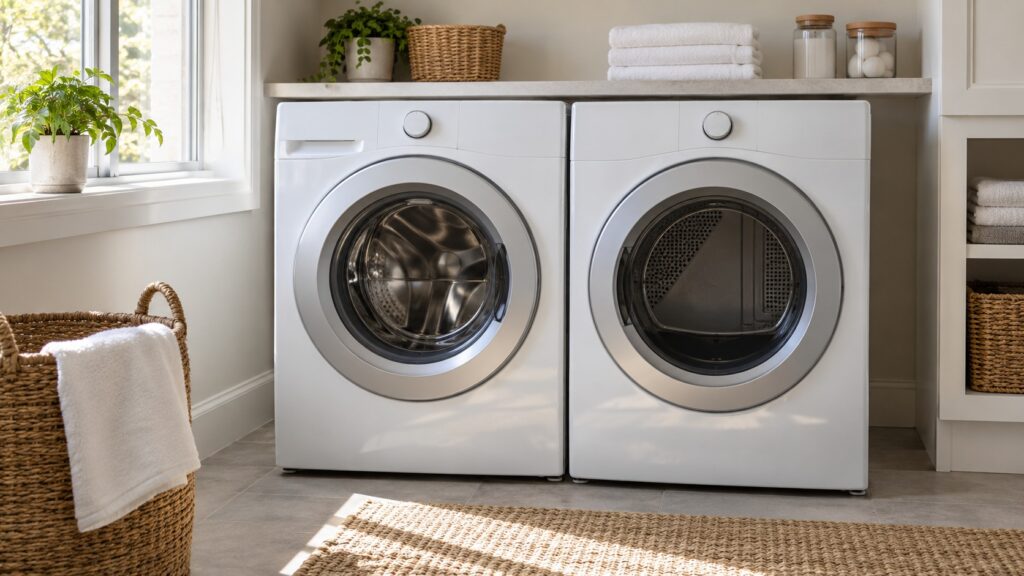
Not for them to work. Our guide to who makes Kenmore appliances explains that Kenmore products are built by outside companies, and our model number decoder says the first three digits of the model number identify the builder. The laundry models on our pages are mostly 110-prefix machines built by Whirlpool, including the top-load washers 110.20952992, 110.20222510 and 110.27542600 and the dryers 110.60902990, 110C70832990 and 110C71492310, plus the 796.4044 front-load washer, which our pages describe as LG-built. There is no technical need to buy both from one builder, because they are separate machines that share only the room. Buy a matching pair if you want the same styling, the same control layout or a stacking arrangement, and check that the washer and the dryer are designed to stack before you plan it.
Should you choose a top-load or a front-load washer?
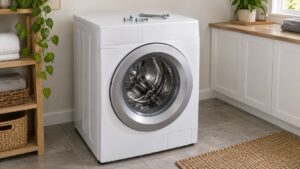
This is the biggest choice, and it is mainly about your space and your habits. A top-load washer opens from the lid, so you need clearance above it, and our pages list several top-load Whirlpool-built models, some in an Oasis family block. A front-load washer opens from the front, like the 796.4044 listed with a tumble-action drum, so you need room in front for the door to swing and for loading. Check the installation sheet to see whether a given front-load washer and dryer are designed to stack. Our pages do not rate one style against the other, so choose by fit and by how you load. Whichever you choose, our washer installation guide says to remove all shipping bolts, level the machine and confirm the drain standpipe height.
Gas or electric: what does the dryer need?
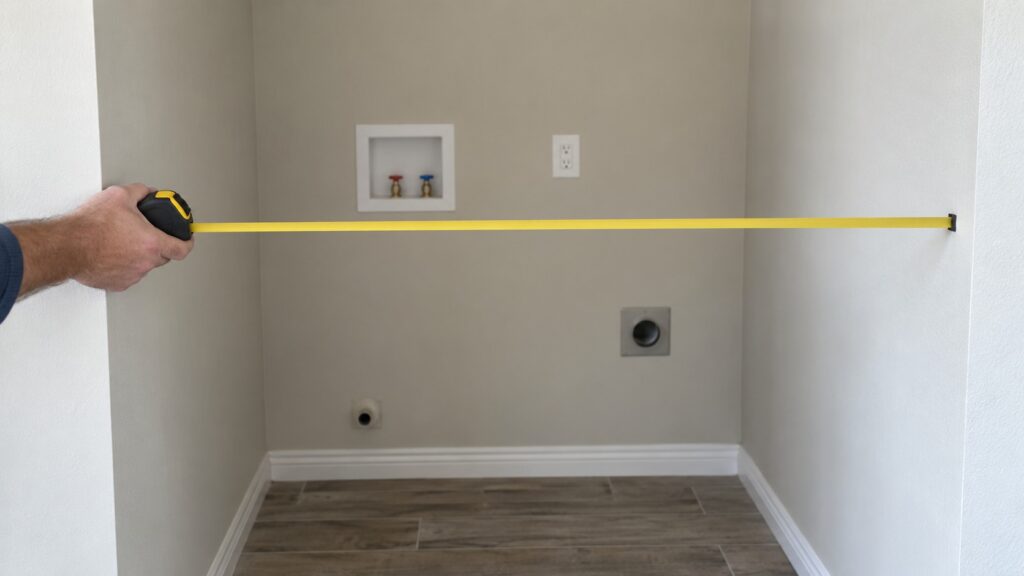
Our dryer installation guide says electric Kenmore dryers need a dedicated 240-volt circuit matched to the dryer’s amperage, while gas models need a gas line connection with a shutoff valve and also a 120-volt electrical connection for the drum motor, controls and igniter. Our model pages list gas dryers such as the 110C70832990 and 110C71492310 and an electric dryer, the 110.60902990. Look at what your laundry room already has. Switching from one fuel to the other means new work: a gas line or a 240-volt circuit is a job for a licensed professional, not a weekend task. If you smell gas at any time, do not switch anything on or off, leave and call your gas utility or 911 from outside.
How do you measure the space?
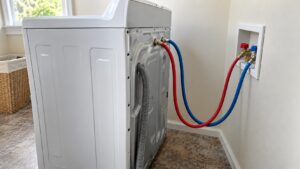
Measure the width, depth and height of the opening or the room, and the width of every door and stairway on the delivery path. Then plan for what sits behind the machines. Our dryer installation guide says the dryer needs clearance behind and beside it so the duct connection seats without kinking, and that pushing it flush against the wall can crush the duct and choke airflow before the first cycle. It says the exhaust duct should be as short and straight as possible, because every foot of length and every 90-degree turn reduces airflow, and that rigid or semi-rigid metal duct performs better than flexible foil or plastic. A closet alcove or a stacked arrangement needs make-up air and a stacking kit rated for the specific dryer. Read the installation sheet for each model before you buy, because its numbers are the final word on duct size, maximum duct length and clearances. Our dryer installation guide and washer installation guide cover both.
What about sound and the Kenmore, Elite and Pro tiers?
Laundry next to a bedroom or an open living area is where sound matters. Our QuietPak dryer buying guide says QuietPak comes in two tiers, 4 and 9, and that the difference is sound insulation, not capacity or cycle features. Our Kenmore vs Elite vs Pro guide says Elite sits a step above mainline Kenmore with upgraded features, larger capacity and quieter operation, and that all three tiers are built by the same outside manufacturers. Tiers are positioning names, so read the model number for the builder. Our pages do not give capacity or price figures for these laundry models, so use each model’s spec sheet for those.
What should you check before you buy and when it arrives?
- Write down the full model numbers of the washer and the dryer you are considering.
- Confirm the dryer fuel matches your hookup.
- Measure the space, the path and the room behind for hoses and the vent.
- Confirm the floor is level and strong enough, and the drain standpipe is in place.
- On delivery, remove the washer’s shipping bolts, level both machines and check the connections for drips before the first cycle.
If you buy used, ask for a photo of the model tag. For help with an existing machine, see our Kenmore washer repair and dryer repair pages. We are an independent repair company, not the manufacturer, and you can schedule a visit online with the model numbers ready.