TL;DR: To clean a Kenmore dryer vent, unplug the dryer, ease it away from the wall, disconnect the duct at the back, pull and vacuum the lint out of the duct and the outside hood, make sure the hood damper opens freely, then reconnect the duct and test the airflow. Restricted exhaust is overwhelmingly the most common cause of a dryer that gets too hot or shuts off early, and a clogged vent is a real fire risk, so do not skip this.
Why does a Kenmore dryer vent need cleaning?
A dryer does not dry clothes by heat alone; it dries them by moving warm air through the drum and pushing the damp air outside. If the vent is restricted, the damp air cannot leave. The dryer takes longer, runs hotter and wastes energy. On our site, a restricted exhaust is called overwhelmingly the most common cause of a dryer that is running noticeably hot, and a blocked vent also causes early shutoffs when the dryer trips its thermal protection partway through a cycle.
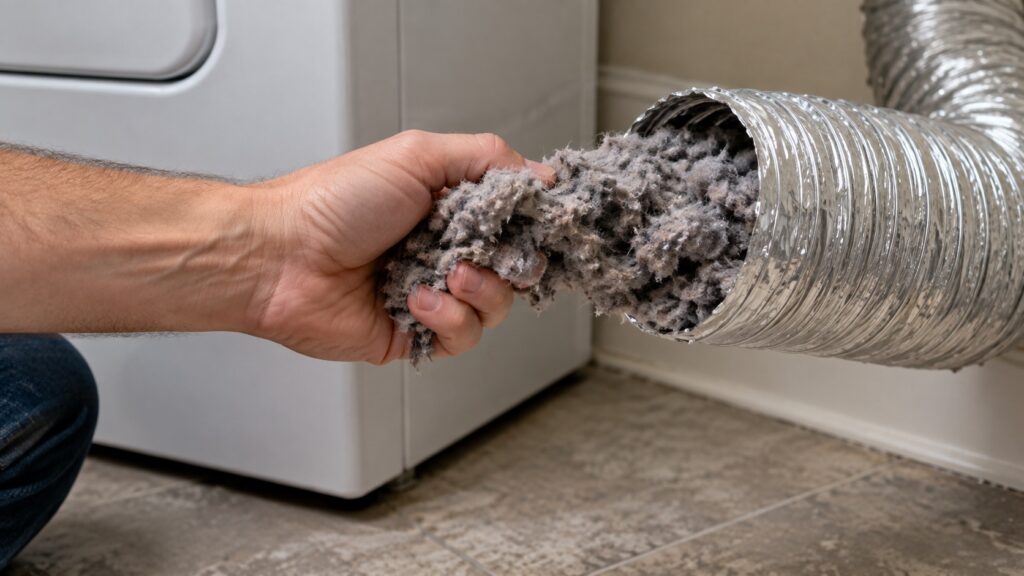
The lint trap catches most lint, but not all of it. The rest travels down the duct and settles in the bends and at the outside hood. Over months it forms a mat, and the passage narrows. Cleaning the vent restores airflow, and it also removes the fuel that makes a clogged vent a fire hazard.
How do you know the vent is clogged?
- Clothes are still damp after a normal cycle, or a load needs two cycles.
- The cabinet, especially the back and top, feels unusually hot.
- There is a faint scorched smell, or clothes come out very hot.
- The dryer shuts off partway through a cycle.
- You see little or no air at the outside hood when the dryer is running.
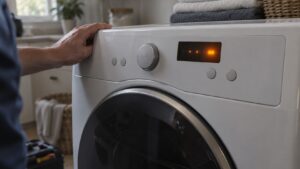
- On LG-built Kenmore dryers, the display shows d90 or d95, which our site lists as a vent blockage warning. Our guide to the d90 and d95 codes covers them.
If a dryer runs for the full time and still leaves clothes wet, check the vent before suspecting the heater or sensors.
How do you clean the vent, step by step?
- Unplug the dryer. For an electric dryer, unplug it or turn off its breaker. If you have a gas dryer, leave the gas line alone and ask a technician to move it, since pulling on the connector can cause a leak.
- Clean the lint screen and wash it with soapy water if it has a waxy film from dryer sheets; a film blocks airflow even when the screen looks empty.
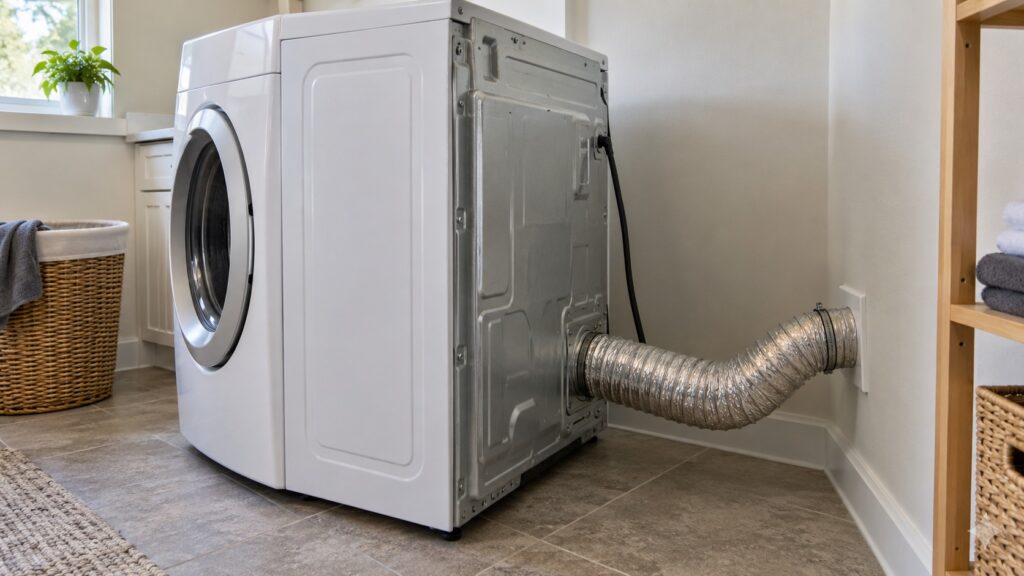
- Ease the dryer away from the wall enough to reach the duct. Take care not to crush or kink the duct.
- Disconnect the duct from the dryer and, if you can, from the wall. Loosen the clamps with a screwdriver.
- Pull out lint by hand, then use a vent brush and a vacuum with a hose attachment to clear the duct and the dryer’s own outlet.
- Go outside to the exterior hood. Remove lint and check that the damper flap opens freely and is not blocked by debris, snow or a bird’s nest.
- Reconnect the duct with secure clamps and foil tape on the joints, then push the dryer back without crushing the duct.
- Test. Run the dryer on air-dry or low heat for a few minutes and feel for strong airflow at the outside hood.
Wear gloves and a dust mask; lint dust is fine and gets everywhere. Keep a trash bag handy for the mat of lint that comes out of the duct, and wipe the floor behind the dryer while it is moved, because that area collects lint too. If the duct runs through a wall, floor or roof, clean as far as you can reach from each end, and note if the airflow at the outside hood is still weak, since that means the blockage is out of your reach.
What kind of duct should you use?
Rigid or semi-rigid metal duct gives the best airflow and does not trap lint the way ridged plastic or thin foil can. Keep the run as short and as straight as you can, with as few bends as possible, and avoid long snaking foil that sags and collects lint. If your duct is plastic, crushed or very long, it is worth correcting during the cleaning. Our dryer installation guide covers duct routing, clearances and the outside hood.
How often should you do this?
Clean the lint screen after every load, and clean the full duct at least once a year, more often if you dry big loads daily, have pets or have a long duct run. If the dryer has been giving you symptoms, do it right away. Pair it with the routine in our dryer maintenance guide, which also covers the sensor strips inside the drum.
What if the vent is clean and the problem remains?
If airflow is strong and the dryer still runs hot, shuts off early or does not dry, the cause moves to the heater, the thermostat, the thermal fuse or the moisture sensor. Read dryer not heating and dryer needing multiple cycles for the next steps. Do not resume regular use if the dryer still smells of scorching. Our Kenmore dryer repair technicians can test the heat circuit, and you can book a visit whenever you need.