Water in the ice bin, a drip inside the freezer, or a puddle on the floor behind the unit all point at the same short list of parts. A Kenmore ice maker leaking water is almost always losing that water in one of four places: the fill tube that carries water to the mold, the water inlet valve that is supposed to shut the water off, the supply line fitting at the back of the cabinet, or a drain that has iced over and is sending melt water somewhere it was never meant to go. None of those is a sealed-system repair, and three of the four are visible without taking the appliance apart.
Why is my Kenmore ice maker leaking water?
Ice makers do not hold water. They take a measured fill, freeze it, and dump it — so any water that is standing, dripping or running is water that arrived at the wrong moment or in the wrong quantity. That single idea sorts the causes faster than any parts list.
Too much water at fill time means the valve is passing when it should be closed, or the fill cycle is running long. Water in the wrong place means the tube is not aimed where it used to be. Water that appears hours after the last harvest, with the ice maker idle, is usually melt water from a defrost cycle that could not reach the drain pan.
Before any of that, note whether the leak follows fill cycles. Listen for the fill: a short hum and a rush of water every couple of hours. If the wet patch grows right after that sound, the fault is on the supply side. If it grows steadily with no fill happening, it is a drain or a seal.
Where is the water actually coming from?
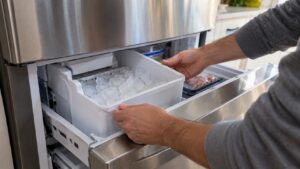
Pull the ice bin out and set it in the sink. With the bin out you can see the mold, the fill cup at the back wall, and the plastic fill tube that feeds it. Dry the compartment floor completely with a towel, then leave the door closed for a few hours and look again. A dry floor with a wet bin is an overfill; a wet floor with a dry bin is a drip or a drain.
On a side-by-side Kenmore with the ice maker in the freezer door, also check the chute flap. A flap held open by an ice chip lets humid room air into a cold chute, and the frost that forms there melts into exactly the kind of small, repeating puddle owners blame on the ice maker.
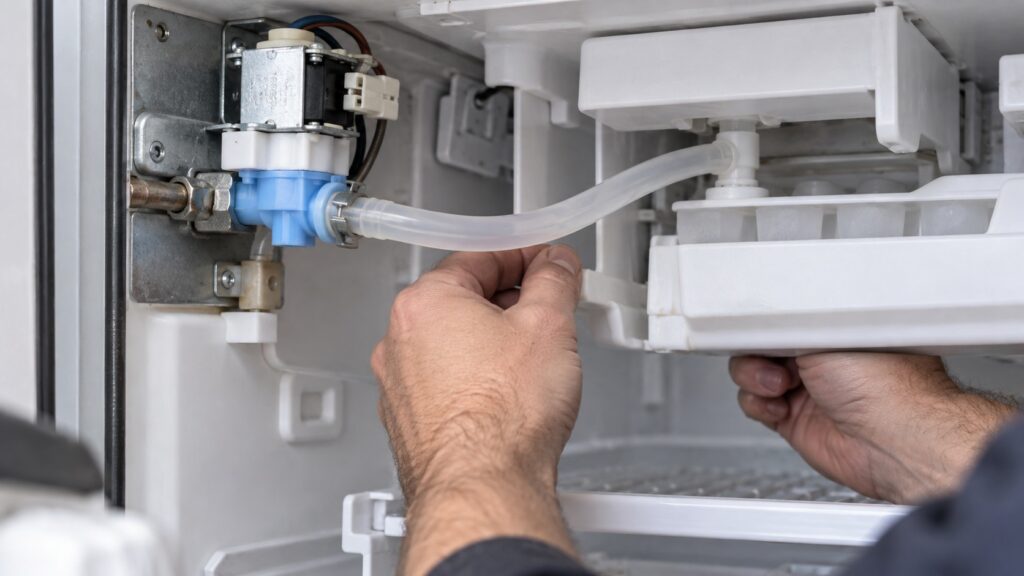
Is the fill tube overshooting the mold?
The fill tube enters through the back wall of the freezer and ends just above the mold. It is held by a friction fit and a clip, which means it can be knocked out of line by a bin going in crooked or by someone chipping at frost with a utensil.
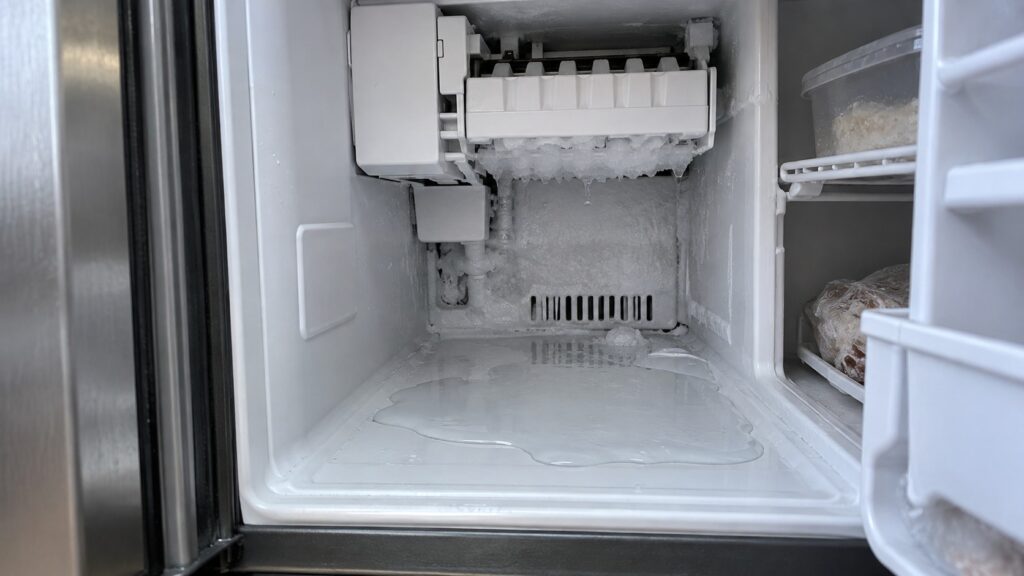
Look along the tube toward the mold. The end should sit centered over the fill cup with a finger’s width of clearance. If it points past the cup, each fill puts a few ounces of water onto the compartment floor, where it freezes into the sheet of ice owners chisel out every few weeks without ever finding the cause.
A tube that is iced solid causes the mirror image of the same problem: the fill backs up at the valve end and runs down the outside of the tube. Thaw it with warm water from a turkey baster rather than a knife, and never with a heat gun near the liner.
What does a water inlet valve that fails to shut off look like?
The inlet valve is an electrically operated shut-off at the back of the cabinet. Mineral scale on its seat, or a piece of grit from a plumbing repair, keeps it from closing fully. The result is a trickle that continues between cycles, so the mold is already brim full when the next fill is called and the overflow runs into the bin.
The signature is ice that is fused into one block rather than separate cubes, often with a thin icicle hanging from the fill cup. A second signature: the leak is worse in the hours after the household uses a lot of water, because the pressure surge on the line pushes past a marginal seat.
This is a replaceable part, not a repair. Testing it means isolating the water and checking the valve electrically, which puts you at a live circuit and a pressurized line at the same time — a reasonable place to stop and hand it over.
Could the drain or the filter head be the real source?
Two impostors account for a surprising share of calls. The first is the defrost drain. Every frost-free Kenmore melts its evaporator frost on a schedule and routes that water down a tube to a pan near the compressor. When the tube ices up, water backs into the compartment and finds the lowest point — which on many layouts is directly under the ice maker.
The second is the water filter head. A cartridge that is a quarter turn short, or an aftermarket cartridge with a slightly different collar, weeps from the head rather than the ice maker. The tell is a leak that started the same week the filter was changed. Our Kenmore ice maker maintenance guide covers filter seating and the bin cleaning that keeps clumping from being misread as a leak.
If water is showing up under the crisper drawers instead of in the freezer, treat it as a refrigerator problem rather than an ice maker one — our refrigerator leaking water guide follows that path.
Which parts does a technician replace?
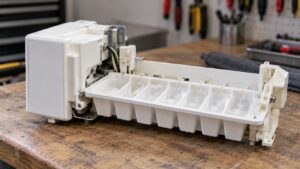
In order of how often they are the answer: the water inlet valve, the fill tube and its clip, the ice maker module or mold when the housing is cracked, and the supply line or its compression fitting. On units where the ice maker has been apart before, a cracked fill cup is worth a look too.
Have the full model number ready — it is on a tag inside the fresh food compartment or behind the bin. Kenmore units are built by several manufacturers, and a 106-prefix ice maker takes different parts from a 795-prefix one, even where the symptom is identical. Our ice maker parts guide explains which pieces are shared and which are not.
When should you call for service?
Call when the trickle continues with the ice maker switched off, when the leak has reached the floor under a wood or laminate surface, when the fill tube is frozen solid every time you clear it, or when a cracked mold is visible. Shut the household supply to the appliance off in the meantime — the shut-off is usually a small valve behind the unit or under the sink.
We are an independent repair company and not a factory service arm. Pricing starts from a diagnostic visit and we confirm the estimate before any work begins, with parts from $30 for a fill tube and higher for a valve or module. Kenmore ice maker repair covers valves, fill systems and modules, you can call 1-844-351-4064, or you can schedule a visit online.