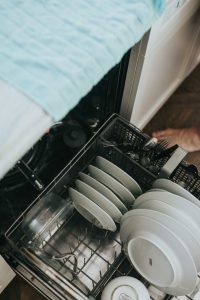
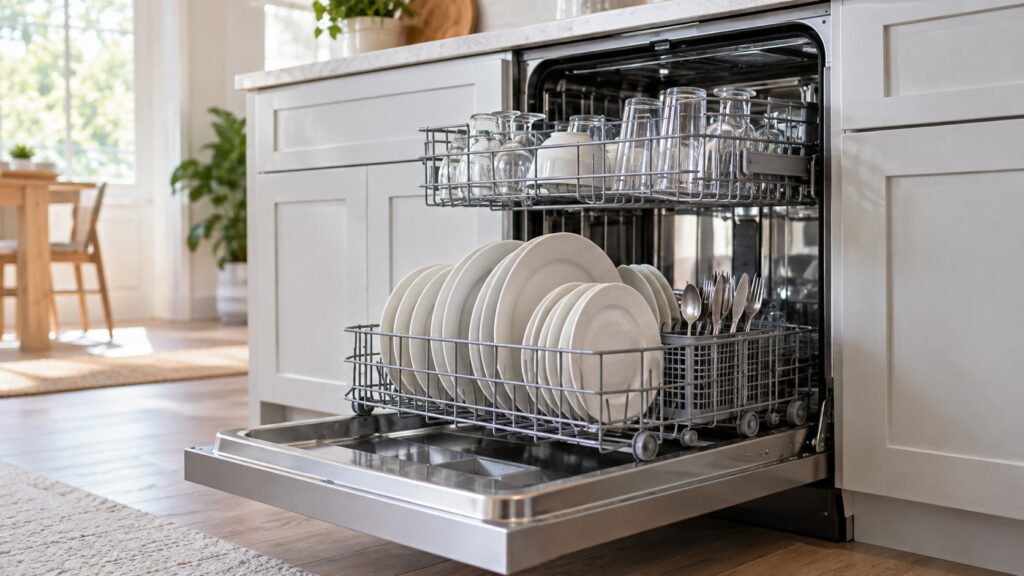
A dishwasher is bought once a decade and lived with daily, so the specifications that matter are not the ones on the front of the box. A useful kenmore dishwasher buying guide skips the cycle count and looks at four things: how quiet it is, what the racks let you load, what the filter arrangement means for maintenance, and how it dries. Everything else is secondary.
Noise, and why it decides how you use the machine
Dishwasher noise is quoted in decibels, and the number matters more than people expect because the scale is logarithmic — a machine a few points lower is noticeably quieter, not marginally so. In an open-plan kitchen, the difference decides whether you run it while people are in the room or wait until bedtime.
Quietness comes from insulation, a better pump and a manual filter rather than a grinder. It is one of the few specifications where paying more buys something you notice every single day.
Racks: the specification that actually changes daily life
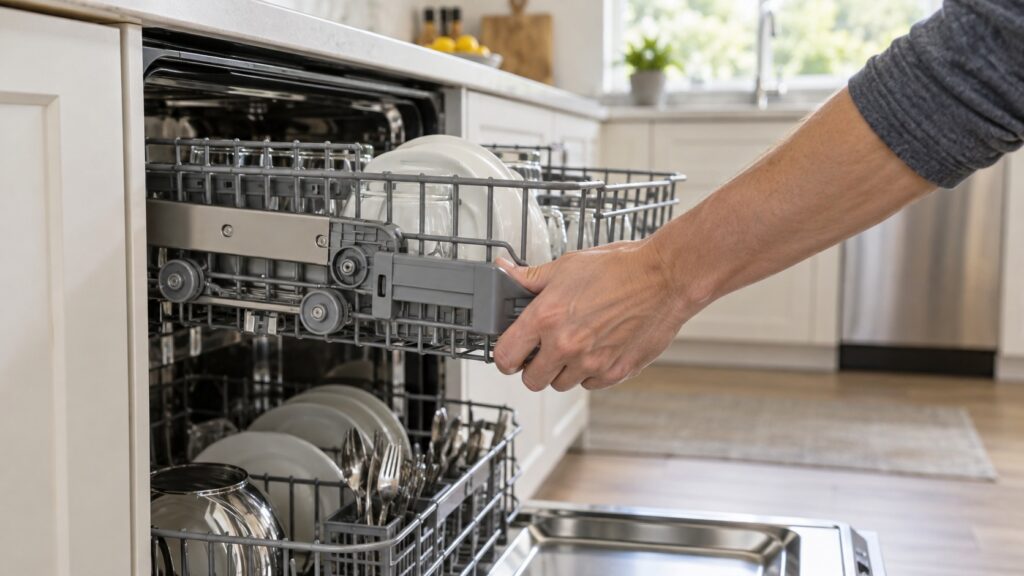
Capacity is quoted in place settings, and it is close to useless as a guide. What matters is whether the rack layout suits what you actually wash.
- Adjustable upper rack — the single most useful feature. It is what lets you fit tall glasses one day and a stock pot the next.
- Fold-down tines in both racks, so a row can be flattened for bowls or trays.
- A third rack for flat utensils, which frees the basket and is genuinely useful — but only if the racks below it still clear your tallest items.
- Cutlery basket placement. A basket in the door frees floor space; a basket in the rack takes it.
- Silverware handling. If you own long serving pieces, check they fit somewhere before buying.
Take a mental inventory of your most awkward items — the largest pot, the tallest glass, a baking sheet — and check the racks against those rather than against a place-setting figure.
Filters: a genuine trade-off
Older dishwashers used a hard food disposer, a grinder that chopped debris so it could drain. It needs no attention and it is noisy. Most modern machines use a manual filter instead: a cylinder you twist out and rinse, which is much quieter but which you have to actually do.
Neither is wrong, but a manual filter left unrinsed for a year produces gritty dishes and a smell, and people then report the machine as failing. If you will not do the rinse, buy accordingly. Our not cleaning guide covers how quickly a neglected filter shows up in results.
Drying, and the thing to understand before you are disappointed
Drying methods differ more than any other aspect of modern dishwashers. A heated dry element is effective and uses energy. Condensation drying uses a stainless tub that holds heat and lets moisture condense on the cool walls — quieter, more efficient, and noticeably less effective on plastics. Some machines pop the door open at the end to vent steam.
If your household washes a lot of plastic containers, condensation drying alone will disappoint you, and no amount of rinse aid fully compensates. If you wash mostly ceramic and glass, it works well. Knowing which you are is worth more than any marketing term. Our maintenance guide covers keeping whichever system you have working.
Cycle length, and a surprise people are not warned about
Modern dishwashers run far longer than older ones — a normal cycle measured in hours rather than an hour. That is not a defect and it is not a sign of a weak machine. It is the direct consequence of using less water and less energy: with less hot water available, the machine compensates with time, soaking and recirculating rather than blasting.
The practical effect is that a dishwasher is now something you start and leave, not something you run between courses. If you need dishes back quickly, look for a genuine quick cycle and check what it gives up — usually drying, sometimes the final hot rinse.
It also means a machine that has quietly grown longer over the years is worth investigating, because that is a real signal. A restricted inlet, a partly blocked filter or a heater that is struggling all show up as cycles that stretch.
Measuring the space honestly
Nominal width is standard, and that is where people stop measuring. Height varies with modern models and the third rack has pushed some machines taller, so a new unit may not clear a countertop that has settled over twenty years. Depth matters if the machine sits proud of the cabinet run.
Check the door swing against an island or a peninsula, check where the water supply and drain connections are, and check the electrical — some machines are hard-wired and some are corded, and they are not interchangeable without work. Our installation guide covers what the opening has to provide.
What is worth paying for and what is not
Worth it: lower noise, an adjustable upper rack, a stainless tub, a soil sensor that adapts the cycle, and a reputation for parts availability. Those affect either daily use or the machine’s life.
Rarely worth it: very high cycle counts, most connected features, and specialized settings you will use twice. Almost every household runs two cycles, an everyday one and an occasional heavy one, whatever the panel offers.
Worth thinking about: a stainless front looks good and shows fingerprints; a panel-ready model disappears into the kitchen and costs extra in both money and fitting.
When to call
Call us before replacing rather than after, if the existing machine is under a decade old — filters, spray arms, drain pumps and door gaskets account for most of what looks like end of life. Call for installation if the connections or the electrical supply need work, and call when a machine will not drain, will not heat or leaks.
We are an independent repair company and not a factory service arm. Pricing starts from a diagnostic visit and we confirm the estimate before any work begins. Kenmore dishwasher repair covers pumps, valves, heating, doors and controls, and you can schedule a visit online.