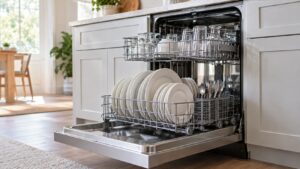
A kenmore dishwasher not cleaning well shows up as cloudy glasses, gritty residue, or dishes that come out with visible food still stuck on them, and the cause is almost always mechanical or water-quality related rather than a sign the machine needs replacing outright. This applies across Kenmore’s dishwasher lineup regardless of which OEM built the specific unit, since spray arms, filters, and hard water affect Whirlpool-built, Frigidaire-built, and other platforms in largely the same way.
What causes a kenmore dishwasher not cleaning well
- Clogged spray arm holes, often from hard-water mineral deposits or food particles
- Hard-water buildup coating the tub interior, heating element, and interior of the spray arms
- A clogged or dirty filter preventing proper water circulation
- A weakening wash pump that no longer generates enough water pressure
- Loading habits that block spray arm rotation or shield items from direct water contact
First checks you can do
- Remove the upper and lower spray arms and check each hole for clogs, clearing them with a toothpick or thin wire
- Spin each spray arm by hand to confirm it rotates freely and is not obstructed by tall items loaded incorrectly
- Check the interior tub and heating element for a chalky white film, which indicates hard-water mineral buildup
- Run a dishwasher-cleaning product formulated to dissolve mineral deposits, following the product’s cycle instructions
- Remove and rinse the filter assembly at the bottom of the tub, since a clogged filter reduces water pressure at the spray arms
Loading habits that make cleaning worse
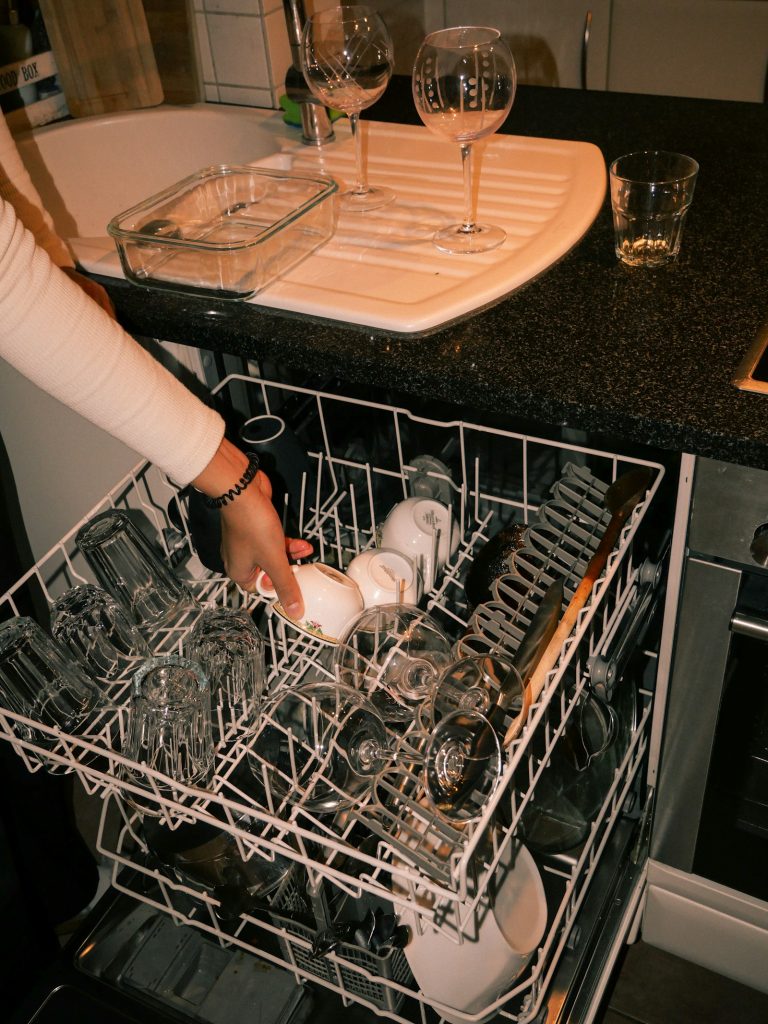
Nesting bowls together, blocking the spray arm’s rotation path with oversized pans, and loading items so they shield each other from direct spray all reduce cleaning performance even on a perfectly functioning dishwasher. Leaving enough clearance for water to reach every surface matters as much as the mechanical condition of the unit.
When to call a technician
If the spray arms are clear, the filter is clean, and you have run a hard-water cleaning cycle but dishes still come out dirty, the wash pump itself may be losing pressure, or the water inlet valve may not be filling the tub to the correct level. Our dishwasher repair technicians can test water pressure and pump output directly rather than guessing. It is worth pairing this with our guide on UltraWash maintenance, which covers the routine cleaning steps that prevent buildup in the first place.
How to prevent it
Rinse the filter monthly, run a hard-water cleaning cycle every one to two months in areas with mineral-heavy water, and load dishes with enough clearance for spray arms to rotate freely. Checking your model number can also confirm which OEM built your dishwasher, useful if you need a replacement spray arm or pump part.
How water quality affects the whole system
Homes on hard well water or municipal supplies with high mineral content see this problem far more often than homes with softer water, since the same minerals that leave spots on glassware also coat the interior of spray arms, the heating element, and even the pump housing over time. In those areas, a kenmore dishwasher not cleaning well is often as much a water-quality issue as an appliance issue, and running a hard-water cleaning cycle on a more frequent schedule – every three to four weeks rather than every couple of months – tends to keep performance noticeably more consistent.
Quick summary
Clear spray arms, a clean filter, and a periodic hard-water cleaning cycle solve the vast majority of cleaning complaints, and loading habits that leave room for water to reach every surface make a bigger difference than most people expect.
If routine cleaning does not restore performance, our experienced, independent technicians can diagnose the pump, valve, or spray system properly, using genuine OEM parts and backing the repair with a 30-day labor warranty. Schedule service at /schedule/. General Kenmore information is available at kenmore.com.