A Kenmore ice maker not making ice is a common but genuinely symptom-based problem to troubleshoot, since standalone Kenmore ice makers — mostly built by Whirlpool and carrying a 106-prefix model number — do not use a digital error-code system the way some Kenmore refrigerators do. That means working through a short list of physical causes rather than reading a code on a display.
Why This Is a Symptom-Based Category
Kenmore’s standalone and freestanding ice maker lineup is a smaller, simpler product category than its refrigerators, and most units built for Kenmore in this space come from Whirlpool. These are largely mechanical appliances built around a water fill cycle, a freeze cycle, and an ejector mechanism, without the digital control boards and display codes found on larger LG-built refrigerator-freezer combos.
What Causes an Ice Maker to Stop Making Ice
- Frozen or kinked water line: If the supply line behind or underneath the unit has frozen (common near an exterior wall in cold weather) or gotten kinked during installation, no water reaches the ice mold at all.
- Clogged fill valve: Mineral buildup or debris in the water inlet valve can restrict or fully block the water needed to start each freeze cycle.
- Stuck ejector arm: If the mechanical arm that pushes finished ice out of the mold is jammed, often by a stray ice cube or mineral buildup, the cycle cannot complete and the unit may stop trying altogether.
- Low water pressure to the unit: Insufficient supply pressure can prevent the fill valve from opening fully even when it is not clogged.
First Checks You Can Do Safely
- Trace the water line from the wall connection to the unit, checking for any visible kinks or frost.
- Confirm the water supply valve behind the unit is fully open.
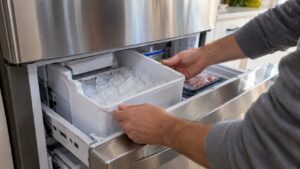
- Open the ice compartment and check whether the ejector arm moves freely by hand when the unit is unplugged.
- Look for a single large ice clump or chunk jamming the ejector mechanism.
When to Call an Experienced Technician
If the water line is clear and the ejector arm moves freely but the unit still is not producing ice, the fill valve itself may be clogged or failed internally, which is best confirmed by an experienced independent technician rather than replaced on a guess. This is worth distinguishing from a unit that is making ice but failing to dispense it — see our companion guide on Kenmore ice maker not dispensing if that is closer to what you are seeing.
How to Prevent It From Recurring
Keep the water line insulated if it runs near an exterior wall, check the fill valve periodically for mineral buildup in hard-water areas, and clear any ice jams from the ejector mechanism as soon as you notice slowed production.
It is also worth checking the surrounding freezer temperature before assuming the ice maker itself is responsible. Whirlpool-built 106-series ice makers, whether freestanding or built into a refrigerator-freezer combination, typically need the surrounding compartment at or below roughly 10 to 15 degrees Fahrenheit to complete a normal freeze cycle in reasonable time. If the freezer is running warmer than that for any of the reasons covered in our freezer troubleshooting guide, the ice maker can appear to have failed when the real issue is simply insufficient cold air reaching it.
One final check worth doing before calling: confirm the household water supply itself is working normally elsewhere in the home, since a whole-house low-pressure issue or a recent water shutoff can affect the ice maker just as much as a problem inside the unit itself.
Our ice maker repair technicians handle Whirlpool-built Kenmore ice makers regularly, using genuine OEM parts and backing every repair with a 30-day labor warranty. We are an independent service and not affiliated with Kenmore, Sears, or Transformco. Browse supported models, find service near you, or visit kenmore.com for manufacturer resources. Ready for a diagnosis? Schedule service today.