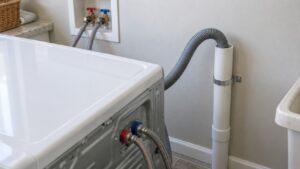
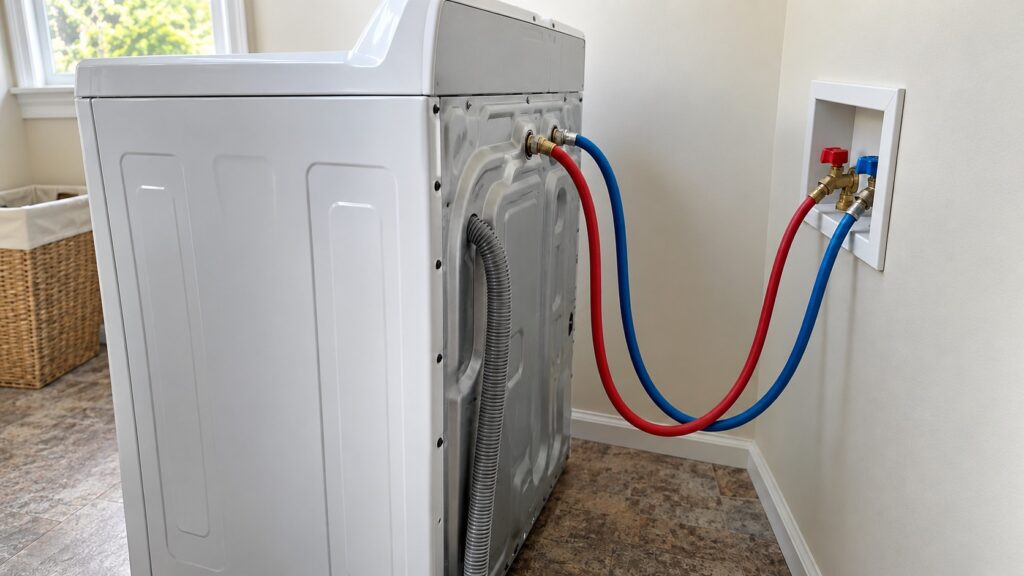
The Kenmore washer water inlet valve is the electrically operated valve at the back of the washer where the hot and cold hoses connect; it opens when the control calls for water and closes when the tub has enough. When it fails, the washer starts a cycle but fills slowly, fills with the wrong temperature or does not fill at all. Our Kenmore washer pages list the water inlet valve beside the inlet screens, the supply hoses and the lid or door switch as the parts behind a washer that will not fill, and rate the symptom as medium severity. This guide explains what the valve does, what to rule out first and how to match the right part.
What does the water inlet valve do on a Kenmore washer?
A washer cannot simply be left connected to household water pressure, so there is a valve between the hoses and the tub that stays shut until the control tells it to open. In general it has an electrical coil for each supply, so hot, cold or both can enter depending on the cycle and the temperature setting. The control opens it, watches for the level it wants and then closes it. That makes the valve one of the parts that works on every cycle, which is why it can wear out. Hard water leaves mineral deposits that can narrow its small openings, and sediment from the supply collects in the screens before it. Our washer pages describe the symptom and the parts but not the valve’s internal design, so the manual and a technician’s parts catalog are the sources for your model.
What are the signs of a failing inlet valve?
Our Kenmore washer not filling page lists the signs: the washer runs through its cycle motions but no water enters the drum, or water trickles in very slowly. It also lists a code on models with a display that points to a fill or supply problem, and says the problem sometimes begins after a water heater repair or other plumbing work. In general a valve can also fail the other way, letting water in when it should not, or leak at its connections. If you see water at the back or under the washer, stop the washer, close both shutoff valves and switch off its breaker at the panel while standing on a dry floor.
What should you rule out before blaming the valve?
The same page says the common everyday causes are not the valve. Work through them in order:
- Both shutoff valves open. Confirm the hot and cold valves behind the washer are fully open. A partly closed valve gives a slow fill.
- The hoses. Check for kinks or damage where the washer sits close to the wall. A pinched hose restricts the flow.
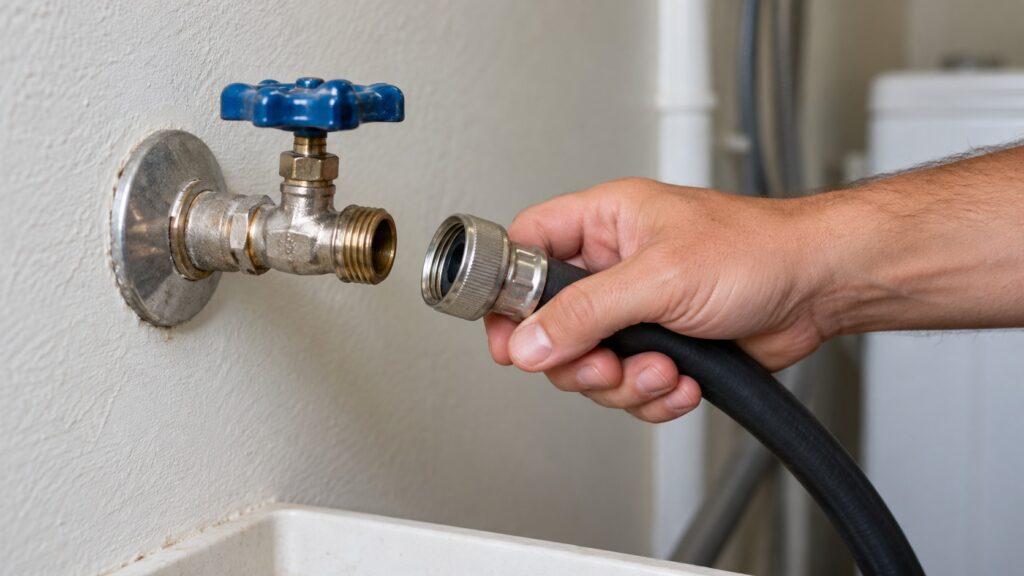
- The inlet screens. Close both shutoff valves, then disconnect the hoses carefully and clean any sediment from the small mesh screens where they connect. Have a towel ready, because hoses hold water. Fit the hoses back, tighten them by hand without overtightening, and check both connections for drips before the next cycle.
- The lid or door. Make sure it closes fully, since a washer may not fill without confirming that.
- The code. If a code appears, read the first three digits of your model number before assuming which builder’s code table applies.
If it still will not fill after the valves are open and the screens are clean, our page says an experienced technician should test the valve for your Kenmore’s platform before any part is ordered.
Which inlet valve fits a Kenmore washer?
Kenmore is a retail house brand, and the machine is built by someone else. Our model number decoder says the first three digits identify the builder: 110 and 665 are Whirlpool-built, and 795 and 796 are LG-built. A Whirlpool-built top-load washer and an LG-built front-load washer use different valves and different codes, and our not-filling page notes that an LG-built washer often shows an IE inlet code for the same condition, while a Whirlpool-built one may show a long fill pattern. So the part is matched from the full model and serial number, never from the name on the front. Our parts lookup guide explains how to match a part by model number rather than by badge. Photograph the rating plate before you call.
Can you replace the inlet valve yourself?
We do not recommend it. The valve is electrically operated, it sits behind panels on a machine that carries water and mains voltage, and the access differs by build. Our not-filling page lists the valve among the parts a technician may replace and says the correct part is matched from the model and serial number so that more is not replaced than the problem actually needs. If you are comfortable with the owner checks above, do those, and leave the valve to a technician. Do not open the back or top of the washer, and do not test the valve with a meter.
When should you call a technician?
Call when the washer still will not fill after you have opened the valves, cleared the screens and checked the hoses, when it fills the wrong temperature, when it keeps filling or leaks at the connections, or when the same problem returns. Our Kenmore washer repair page explains a visit, and you can schedule a visit online with the model number ready. For a washer that has no water but a display, our washer not filling page lists the checks. For the rest of the symptom family see Kenmore washer not draining. We are an independent repair company, not the manufacturer.