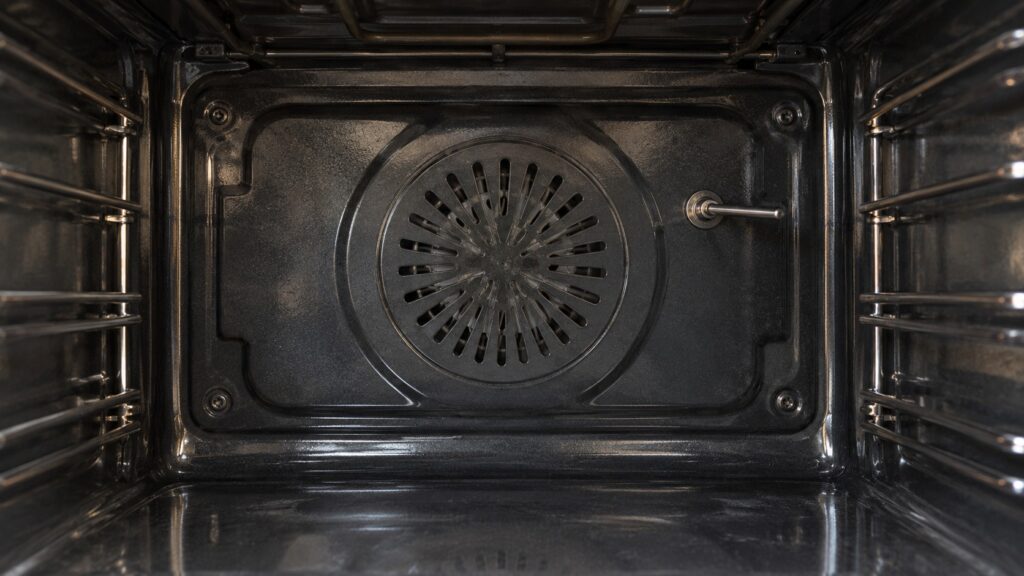
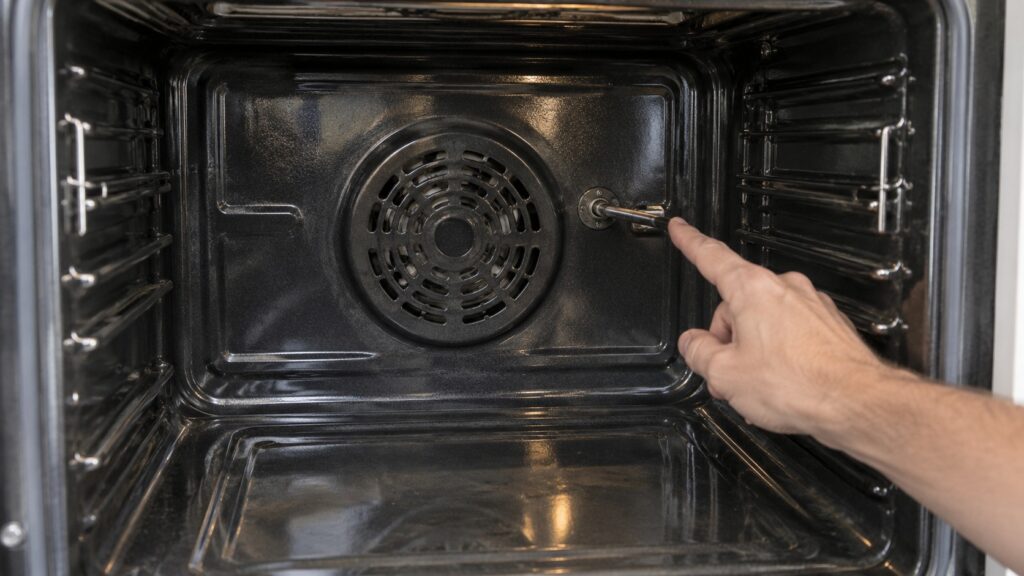
The Kenmore oven temperature sensor is a thin metal probe, called an RTD sensor, mounted at the back of the oven cavity. The electronic oven control reads it to know how hot the cavity is. When the control cannot get a reliable reading, it shows a sensor code, and our pages say the oven may not heat or may shut off mid-bake. What you can safely do yourself is look at the probe with the oven cold, note the code and your model prefix, and reset at the breaker. Testing the sensor is a technician’s job.
Where is the temperature sensor on a Kenmore oven?
Our pages place the RTD probe at the back of the oven cavity. Our F3E0 and F3E1 guide says the probe and its connector are at the back, and our F3 and F4 page says to check the probe at the back of the cavity visually without touching a hot oven. It is a thin metal probe, not to be confused with the meat probe plug. Our FD code page makes that distinction: FD refers to the meat or temperature probe accessory and its receptacle jack, not the oven’s own cavity sensor. If you see FD on the display, it is the accessory probe, not the cavity sensor.
The wiring connection for the sensor is behind the cavity wall. Do not remove the back panel or the oven’s interior panels to reach it. That is a technician’s job.
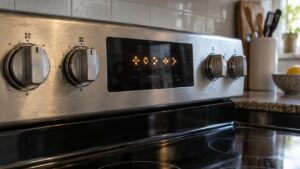
Which code do you see: F3E0, F30 or F3?
The code depends on the builder of your oven, shown by the first three digits of the model number. Our F3E0 and F3E1 page says the Whirlpool-built codes mean the RTD sensor is open (F3E0) or shorted (F3E1) on 106, 110, 198, 664, 665 and 850-prefix models, and that it usually traces to the sensor or its wiring rather than the control board. Our F30 and F31 guide says that on Frigidaire-built models (the page lists many prefixes, including 790 and 970), F30 means the probe circuit is open and F31 that it is shorted, and that older units show F3 and F4. Our F3 and F4 page says that on GE-built 362, 363 and 464-prefix models, F3 or F4 means the oven temperature sensor needs replacement. The same letters and numbers can therefore mean different things on different builders, so check your prefix first. If your code is not on this list, read your owner’s manual.
How do you check the sensor safely?
These steps use only what our pages describe as safe for an owner:
- Let the oven cool completely. Do not reach into a warm oven.
- Power the oven off at the breaker for a few minutes to force a reset, then restore power and try a normal bake. Our pages give this as the first step for these codes.
- Look at the probe at the back of the cavity for visible damage, discoloration or a bent or loose look. Do not bend it or move it, and do not remove any panel.
- Note the exact code, when it appears, and whether it happens at power-on or only once the oven is hot.
- Avoid running self-clean until the problem is resolved. Our F3E0 guide says self-clean drives the cavity to its highest temperatures and can aggravate marginal wiring.
Do not try to bridge or bypass the probe circuit. Our F30 and F31 guide says the control relies on an accurate reading to prevent overheating. Our guides also mention meter testing. We do not recommend that you measure the sensor yourself, because the oven’s supply is mains voltage and a wrong reading means paying for the wrong part twice. Leave the testing to a technician.
What does a bad sensor do to the oven?
Our F3E0 page lists the signs: the oven will not heat or shuts off mid-bake, baking results seem inconsistent before the code appears and the code returns on repeated bake attempts. Our F30 and F31 guide says an oven showing those codes will typically refuse to complete a bake or self-clean cycle at all rather than run a little inaccurately, which it calls a deliberate safety design, not a glitch. It also says that resetting the breaker repeatedly rarely resolves the underlying wiring or probe issue. Our oven not heating diagnostics guide and oven not heating evenly guide cover the other causes.
When should you call a technician?
Call if the code returns after the reset, if the probe looks damaged or if the oven will not heat. Our F3E0 guide says that if a power cycle does not clear the code, the RTD probe typically needs replacing, and occasionally the control board itself if the sensor tests fine but the problem persists. Tell the technician the full model number, the exact code and whether it appears at power-on or only when hot. Our guide says that genuine replacement probes must be matched to your oven’s control platform, not a generic universal sensor. Read Kenmore oven F3E0 and F3E1 codes and Kenmore range F30 and F31 codes for the detail, and the model number decoder to find your prefix.
We are an independent repair company, not the manufacturer. Our Kenmore oven repair team can test the sensor, and you can schedule a visit online.