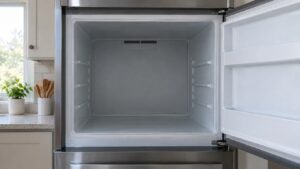
A Kenmore Elite refrigerator too cold in the fresh food section is usually a control problem and not a compressor working too hard. Our symptom page lists three common causes: a damper stuck fully open, a temperature sensor reading warmer than the real temperature so the control keeps cooling, and a miscalibrated thermostat or control board. It also lists two simple ones, a setting that was bumped colder and food stored against the rear wall or vent. Check the simple ones, then call a technician.
Why is my Kenmore Elite refrigerator too cold?
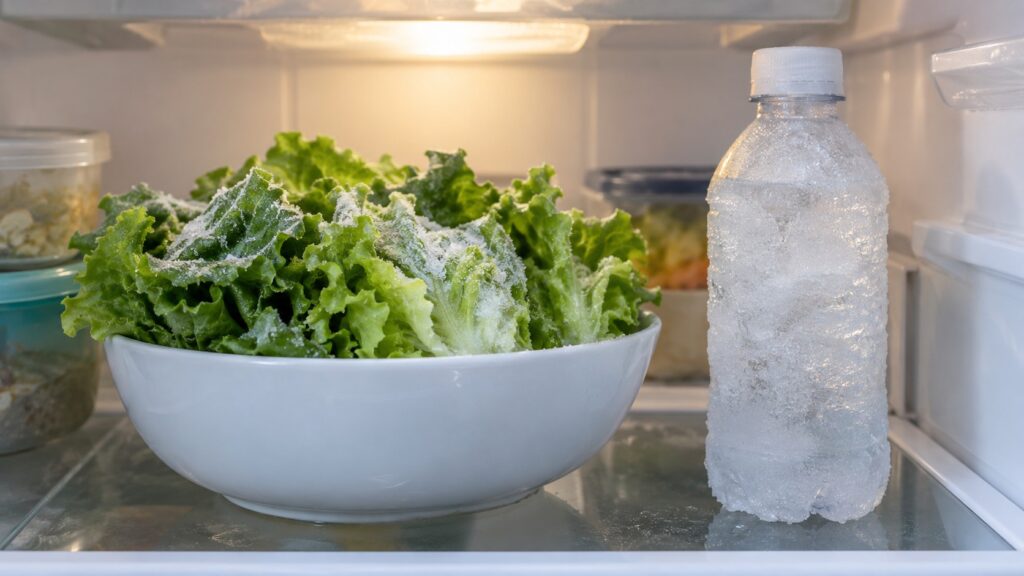
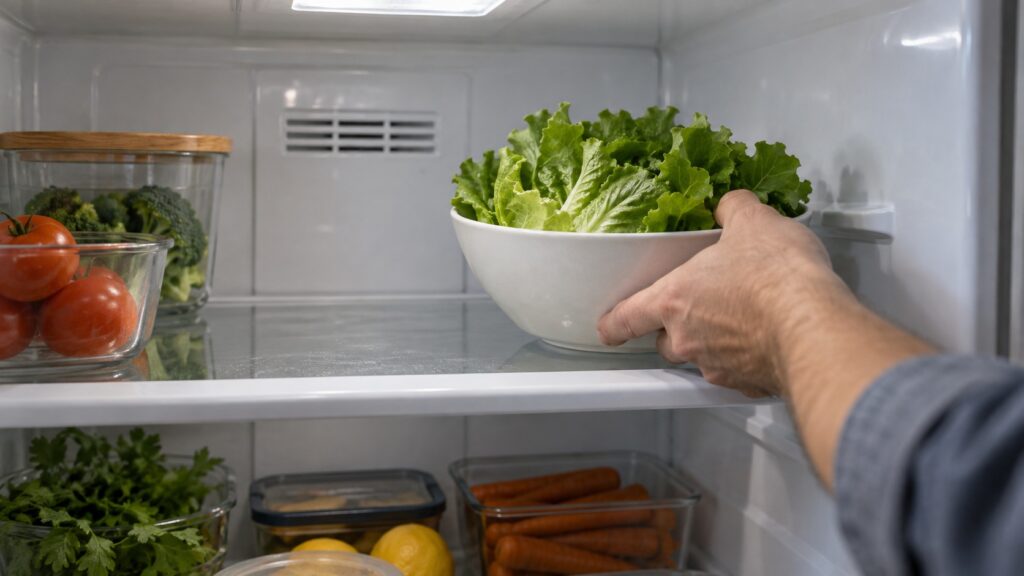
If lettuce, produce or drinks freeze in the fresh food section while the freezer seems normal, the refrigerator is cooling past what you asked for. Our page on a refrigerator that is too cold says this is the opposite of a cooling failure, and that the freezing is often worse near the back wall or the top of the compartment, can be intermittent and may be worse in cold weather or when the section is lightly stocked. The display may show a normal set temperature the whole time.
The Kenmore Elite refrigerators on our pages with the 795 prefix, such as the 795.72063.11 series, the 795.69979.902, the 795.72483411, the 795.74023.412, the 795.72053110 and the 795.77302601, are listed as LG-built. That matters for the codes, and it is why we write about them separately from the Whirlpool-built and Frigidaire-built ones.
What does the damper do?
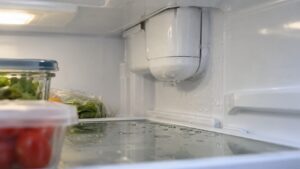
Our guide to a warm fresh food section and a cold freezer explains the airflow: most Kenmore refrigerators generate cold air in a single evaporator behind the freezer wall and move it into the fresh food compartment through a duct, a fan and usually a damper that regulates how much reaches the other side. The damper is the part that regulates how much of that cold air reaches the fresh food side. It is part of the duct and fan assembly, and our pages do not describe how to reach it, so do not try to find it from inside the cabinet or by taking panels off.
When the damper sticks in a mostly closed position, the fresh food side warms. When it sticks fully open, our too-cold page says too much cold freezer air is reaching the fresh food section continuously, and food freezes. We do not describe how to test the damper, and you should not try.
What does the temperature sensor do?
The temperature sensor tells the control the temperature inside the compartment. If it reads warmer than the real temperature, the control keeps calling for cold, and the compartment gets colder than the setting. Our too-cold page lists a faulty temperature sensor as a cause for just this reason: the control is reading warmer than actual, so it keeps cooling.
On the LG-built refrigerators, our code pages describe sensor codes. Er rS means the refrigerator, or fresh food, sensor has shorted or disconnected, and Er FS means the freezer sensor has shorted or disconnected. If the display shows one of those, write it down and tell the technician. A drifted sensor does not always show a code, and a sensor that reads wrongly without a code is the one that freezes your lettuce. Our refrigerator diagnostics step by step guide explains how a technician sorts these out.
What can you check yourself?
Our too-cold page gives four steps, and we agree with them. Move sensitive items away from the rear wall and the direct vent path. Check that the control setting has not been bumped colder than intended; a cleaning cloth across the panel or a child at the controls is enough. Use an appliance thermometer to confirm the real fresh food temperature against the display. Then give the unit time after a setting change before you judge the result; the page says 24 hours.
The refrigerator section should stay at 40°F or below, so do not make it warmer than that to stop the freezing. Do not take out the vent covers or panels to look for the damper. If the food still freezes at a normal-looking setting once you have moved it away from the vent, the cause is inside the control system.
Could a lightly stocked section or cold weather matter?
Our page lists a section that is lightly stocked, and cold weather, as conditions that make the problem worse. A nearly empty compartment has less food to hold the temperature, and the cold air goes straight to whatever is in its path. If your refrigerator sits in a cold garage or an unheated room, the room itself changes how it cycles, and the owner’s manual gives the range the model is built for.
When should you call a technician?
Call if food keeps freezing at a normal-looking setting, if an Er rS or Er FS code shows, if both compartments are too cold or if the temperature display and the thermometer disagree. Our page says a technician should test the thermostat, the control board and the damper assembly for your platform, and should confirm the cause before any part is replaced. Do not open the panels yourself. Have the model number from the tag, which starts with 795 on these models, and a note of where the food freezes. Our guide to a fresh food section warm while the freezer is cold covers the opposite problem, and our refrigerator repair page explains how a visit works.