A refrigerator that keeps the freezer perfectly cold while the fresh-food section slowly climbs toward room temperature is not describing a failing compressor — it is describing an airflow problem. When a kenmore refrigerator fresh food warm freezer cold split shows up, the sealed cooling system is almost always doing its job; the cold air it produces is simply not reaching the fresh-food compartment the way it is supposed to.
Why does one compartment stay cold while the other warms up?
Most Kenmore refrigerators generate cold air in a single evaporator located behind the freezer wall, then move that air into the fresh-food compartment through a duct, a fan, and usually a damper that regulates how much reaches the other side. The freezer sits directly next to the source of cold air, so it keeps working even when something interrupts that transfer. The fresh-food side depends entirely on the fan pushing air through the duct and the damper allowing it through, so a fault anywhere in that chain shows up first, and sometimes only, as a warming fresh-food compartment while the freezer reads perfectly normal.
What is the single most common cause?
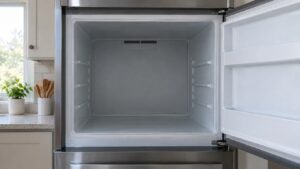
A frosted-over evaporator coil is the answer more often than every other cause combined. The evaporator sits behind a rear panel inside the freezer, and it is supposed to defrost automatically on a schedule set by the defrost timer or control board. When that defrost cycle stops running correctly, ice builds up around the coil and the fan blades until the fan can no longer turn freely or push air past the ice at all. The freezer compartment stays cold because it is closest to the iced-over coil, while almost no air makes it through the duct to the fresh-food side.
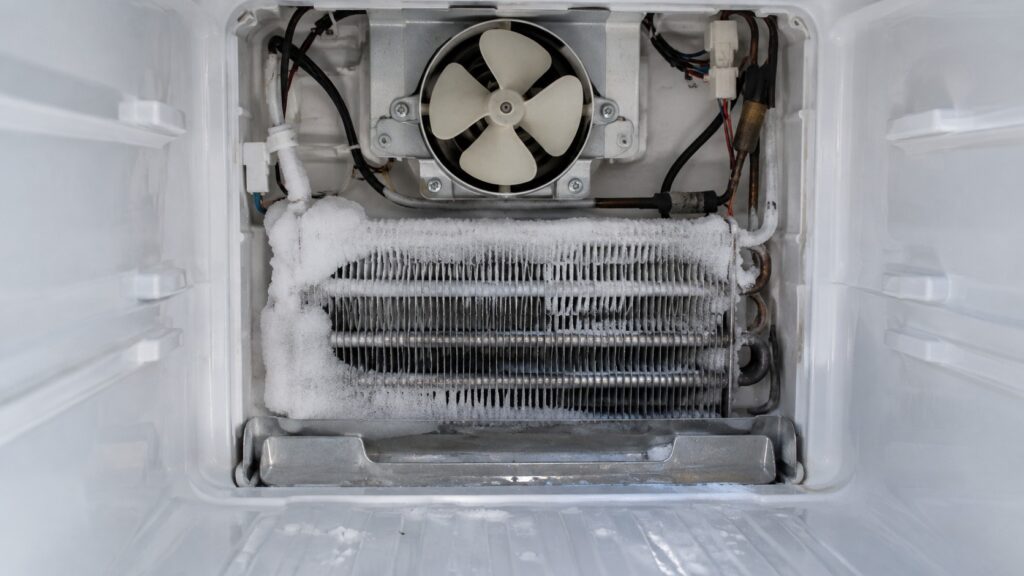
How can you check for a frosted evaporator yourself?
- Listen at the freezer’s rear wall. A fan trying to turn against ice often makes a faint buzzing or clicking sound rather than a smooth hum.
- Look for frost patterns. Frost visible around the rear panel seams, or a rear wall that feels unusually cold and solid rather than just cold, suggests ice has built up behind it.
- Unplug and let it thaw. Unplugging the refrigerator for 24 to 48 hours with the doors open lets a frosted coil melt completely. If the fresh-food side cools normally again once power is restored, the defrost system — not the compressor — is the fault, and it will keep recurring until repaired.
- Check for standing water afterward. Water pooling near the base after a manual thaw confirms ice had built up and is now draining out, supporting the same diagnosis.
What if the coil is not frosted and the fan sounds fine?
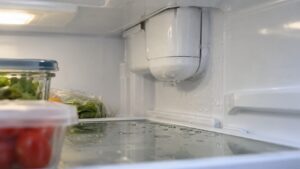
When the evaporator and fan check out, the air damper is the next most likely cause. This is a mechanical flap, sometimes motorized, that opens and closes to control how much cold air reaches the fresh-food compartment. A damper stuck in a mostly closed position starves the fresh-food side of air even though the freezer receives a full supply, and a damper that has come off its track or cracked can fail in the same closed position. This part usually sits in the duct near where the compartments meet, and confirming it is worth doing before assuming a bigger fault, since it is a comparatively simple part to replace once identified.
Could the control board or a sensor be responsible instead?
On models where the damper is motorized or the fan speed is controlled electronically, a control board that has stopped driving either component correctly produces the identical symptom without any physical blockage at all. This is harder to confirm without opening the panel and testing the damper motor or fan directly, and it is the point where a self-diagnosis reasonably stops and a technician’s testing equipment takes over. It is also the least common of the explanations here, and worth ruling out the frosted-coil and damper causes first rather than assuming the control board from the start.
Does the season or how often the doors open change what you see?
Warmer months, or a household that opens the fresh-food door far more often than the freezer door, make a marginal airflow problem show up sooner and more obviously, simply because every door opening lets warm room air in that the duct then has to work harder to replace with cold air from the evaporator. A refrigerator that seemed fine through a mild spring and then developed a noticeable fresh-food warming problem in summer has not necessarily gotten worse mechanically — it may be the same partially blocked duct or slightly sluggish fan that was always borderline, now pushed past the point where it can keep up. This is worth knowing before assuming the fault appeared suddenly, since it changes how urgently the underlying cause needs addressing rather than just noting the timing. A household that stocks the freezer heavily right before a holiday, then notices the fresh-food side warming a few days later, is often seeing the same marginal duct or fan finally lose the fight against the extra door-opening traffic that stocking up creates.
How does this differ from a refrigerator that is warm all over?
A unit where both compartments run warm together, especially with the compressor running constantly, points at heat rejection or the sealed refrigerant system — a completely different repair path covered in our refrigerator not cooling guide. The two-compartment split described here is specifically useful because it rules out the compressor and the refrigerant charge almost entirely, which is also the starting logic in our broader refrigerator diagnostics guide. Separating these two patterns before calling for service saves a technician from re-running checks you have already done.
We are an independent repair company and not a factory service arm. Pricing starts from a diagnostic visit and we confirm the estimate before any work begins. Kenmore refrigerator repair covers fans, defrost, sensors, controls and sealed systems, and you can schedule a visit online.