Most refrigerator repairs go wrong at the beginning, not the end. Someone decides the compressor has failed, replaces a part, and discovers the real fault was a fan or a drain. Useful kenmore refrigerator diagnostics work the other way around: you separate the symptom into a small number of possible causes with a few measurements, and only then decide what to open.
The measurement that starts everything
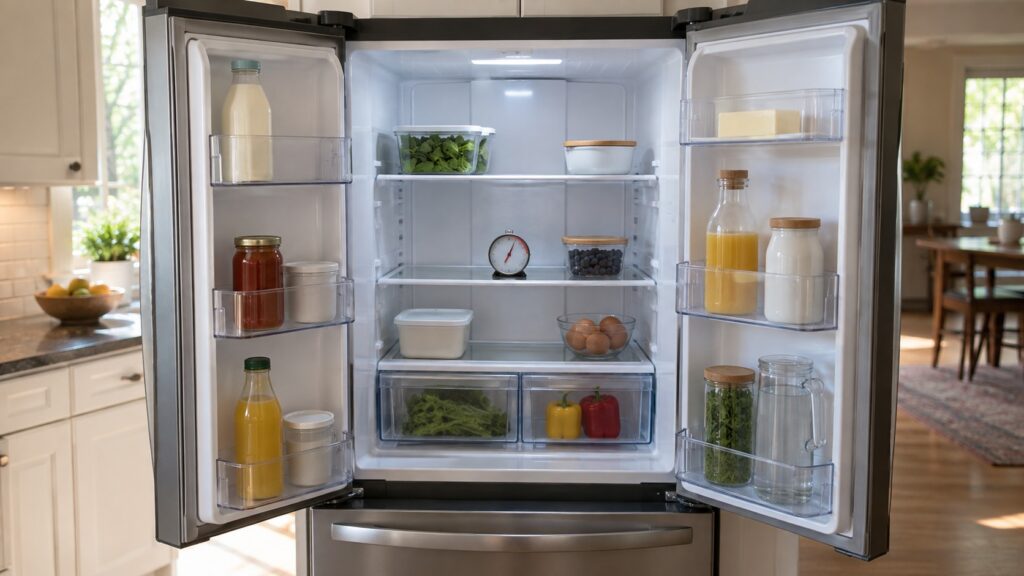
Put a thermometer in a glass of water on the middle shelf of the fresh food side, and another between packages in the freezer. Read both after several hours. Water reads food temperature rather than air, and air swings every time the door opens, which is why display readings mislead.
What you want is the pair of numbers, because the combination narrows the cause immediately. Both compartments warm points somewhere different from one warm and one cold, and one warm and one cold is the single most informative result in refrigerator diagnosis.
Reading the two-compartment pattern
- Freezer cold, fresh food warm — air is not getting from one to the other. Evaporator fan, damper, or an evaporator frosted over by a defrost fault. Not refrigerant.
- Both warm, compressor running constantly — heat is not being rejected or refrigerant is low. Start with the condenser coils and the condenser fan.
- Both warm, compressor not running at all — control, start components, or the compressor itself.
- Both too cold — a sensor reporting the wrong temperature, or a damper stuck open.
- Cycling wildly, neither stable — a door seal, a light that stays on inside, or a sensor drifting.
That one table eliminates most wrong turns. A technician arriving at “freezer cold, fridge warm” is not going to talk about refrigerant, and neither should you.
Listening, which costs nothing
Stand quietly beside the appliance for a couple of minutes. A compressor is a low continuous hum from the bottom rear. An evaporator fan is a lighter whirring that stops when you open the freezer door — press the door switch with a finger and you should hear it start again, which is a useful test in itself.
A condenser fan runs at the bottom near the compressor. If the compressor is running and that fan is not, you have found something worth acting on, because the system cannot reject heat without it.
Timing matters too. A compressor that never stops and a compressor that starts every few minutes are both abnormal, and they point in different directions — the first at heat rejection, the second at a control or a sensor.
What the condenser tells you by touch
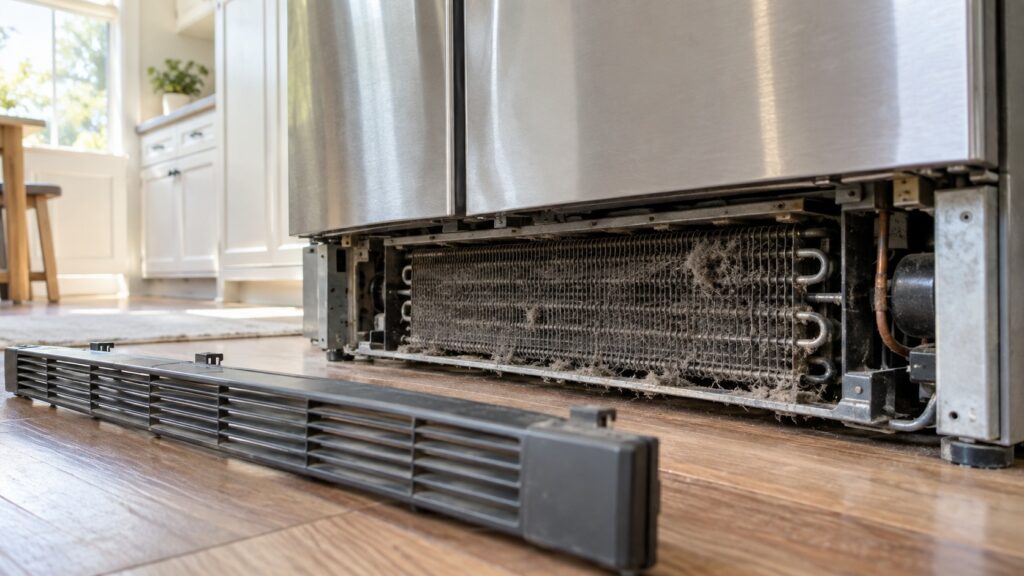
With the compressor running, the condenser area should be warm. Coils are underneath on most models, sometimes at the back. Pull the grille and look: a thick felt of dust is the most common single cause of poor cooling in any refrigerator, and it is free to fix.
If the coils are clean, the fan runs and the area is still barely warm while the compressor hums, that is a sealed system matter — and sealed system work is not a do-it-yourself job in any sense. Our maintenance guide covers coil cleaning and what else belongs on the yearly list.
Frost and water, the two visual clues
Take everything out of the freezer and look at the rear wall. A light, even frost is normal. A thick sheet of ice building over the panel means the defrost system is not clearing the evaporator — heater, thermostat, sensor or control — and the eventual symptom is a fresh food compartment that goes warm while the freezer still seems fine.
Then look under the crisper drawers. Standing water there usually means the defrost drain has blocked, often with a plug of ice, and the water will eventually appear on your floor. Both findings are far more common than the failures people assume.
If you are seeing water on the floor already, our leaking water guide works through the sources in order.
Doors, seals and the things that are not faults
Close the door on a banknote and pull it. If it slides out freely anywhere along the edge, the gasket has failed there and warm air is entering continuously. Check the interior light actually goes out — a light left burning is a small heater in a sealed box, and it is a genuine cause of a compartment that will not hold temperature.
Check the loading too. Shelves packed against the rear vents block the airflow the design depends on, and the symptom looks exactly like a failing fan.
Writing it down before you call
If you do call us, four pieces of information make the visit shorter and the estimate firmer: both measured temperatures, whether the compressor runs and for how long, whether you can hear the evaporator fan, and whether there is frost on the freezer’s rear wall. Add the model number from the plate inside the fresh food compartment.
That set of facts is often enough to know which part is likely before anyone opens anything. Our not cooling guide covers the same ground from the symptom end.
When to call
Call when the pattern points at a fan, a damper, defrost or the sealed system; when the compressor runs constantly with clean coils; when frost is building on the freezer’s rear wall; or when the compartments hold wrong temperatures with good seals and clear vents.
We are an independent repair company and not a factory service arm. Pricing starts from a diagnostic visit and we confirm the estimate before any work begins. Kenmore refrigerator repair covers fans, defrost, sensors, controls and sealed systems, and you can schedule a visit online.