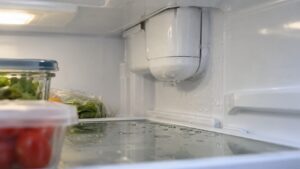
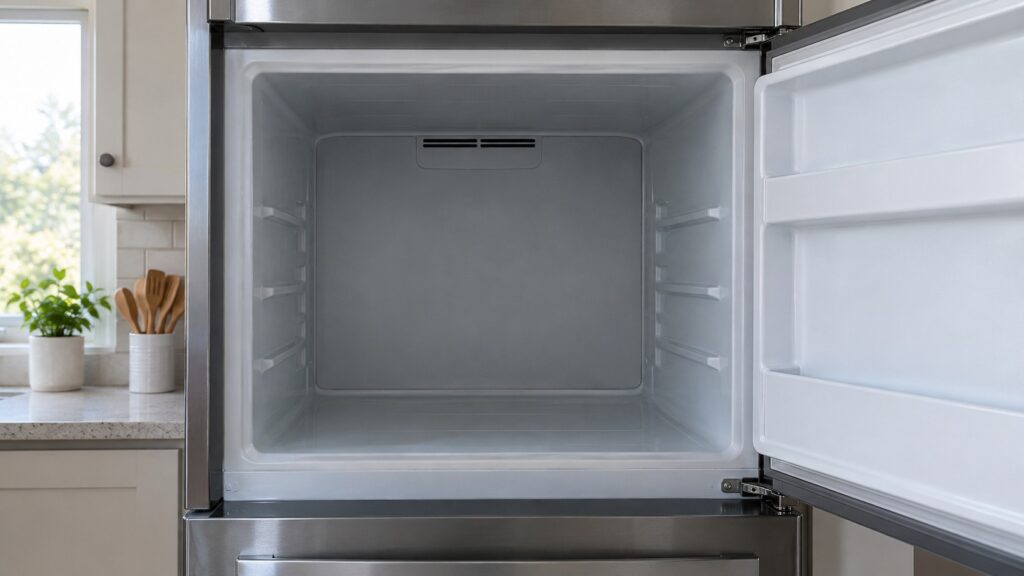
The Kenmore evaporator fan motor is the small fan behind the rear panel of the freezer that pulls air across the cold evaporator coil and pushes it into the freezer and, through a duct, into the fresh-food section. When it fails, or when ice jams its blades, the usual picture is a freezer that stays cold while the fresh-food side warms up, sometimes with a whine, squeal or chatter inside the freezer. Our Kenmore refrigerator pages list a failed evaporator fan motor among the less common causes of that split, behind a frosted coil and a stuck damper. This guide explains what the fan does, how to tell it from its look-alikes and how a part is matched.
What does the evaporator fan motor do in a Kenmore refrigerator?
Our fresh food warm, freezer cold guide explains the design: most Kenmore refrigerators make cold air in a single evaporator behind the freezer wall and move it into the fresh-food compartment through a duct, a fan and usually a damper. The freezer sits next to the source of cold, so it keeps working when the transfer is interrupted. The fresh-food side depends on the fan pushing air through the duct, so a fault in that chain shows up there first. The evaporator fan motor is the part that turns the blade. Our refrigerator noise guide says a refrigerator has exactly three things that move, two fans and a compressor, and that the evaporator fan is the one inside the freezer.
What are the signs of a failing evaporator fan?
Our noise guide says a whine or squeal inside the freezer is the evaporator fan, often with ice against the blade, and that the fan is often switched off when the freezer door opens, so the sound stops within a second or two when you open the door. Our warm-fresh-food guide adds that a fan trying to turn against ice often makes a faint buzzing or clicking sound rather than a smooth hum. The other sign is the temperature split. With the freezer cold and the fresh food side warm, the airflow is the first suspect, not the compressor or the refrigerant, and the guide says not to assume low refrigerant for this pattern. A fan that has stopped completely can cause the same split, but a motor failure is less common than the causes below.
What should you rule out before suspecting the motor?
- A frosted evaporator coil. Our guide says this is the answer more often than every other cause combined. When the defrost cycle stops running correctly, ice builds up around the coil and the fan blades until the fan cannot turn freely or push air past the ice. The fan motor is then a victim, not the cause.
- A stuck air damper. A mechanical flap that controls how much cold air reaches the fresh-food side. A damper stuck mostly closed starves it even though the freezer gets full cold.
- Blocked vents. Overpacked food can block the airflow inside the compartments.
- A control board that is not driving the fan or the damper. Our guide says this is the least common explanation and the point where self-diagnosis stops.
What can you check yourself, and what should you leave alone?
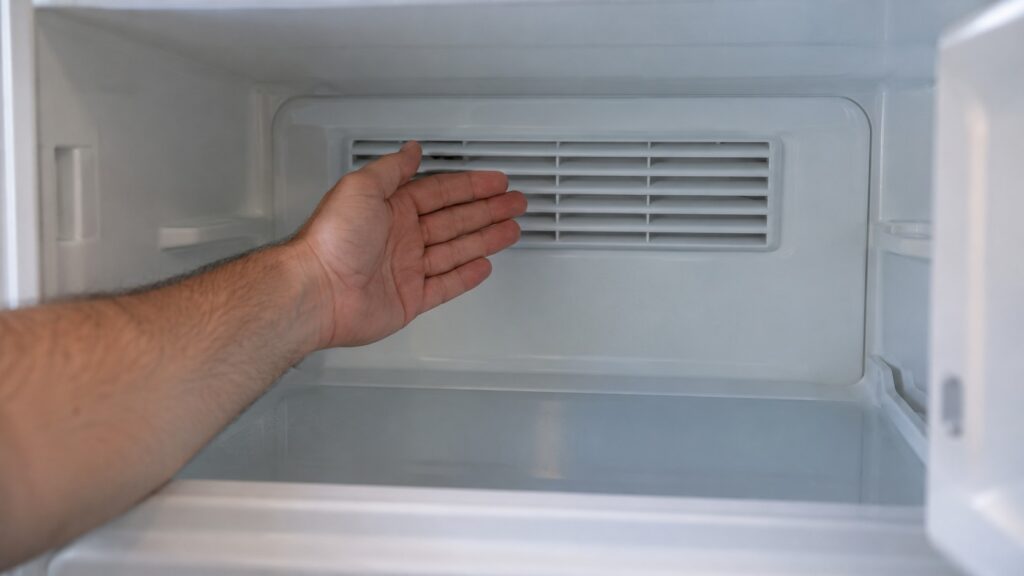
Safe checks stay outside the freezer wall. Listen with the freezer door open and closed, as above. Look for frost around the seams of the rear panel and notice whether the rear wall feels solid and icy. Move food so air can pass in front of the vents. Our guide describes a test for a frosted coil: unplug the refrigerator for a long thaw (24 to 48 hours) with the doors open, and see whether the fresh-food side cools normally again once power is restored; if it does, the defrost system is the fault and the problem will recur until repaired. That is a long time without power. Under FDA guidance a full freezer holds food safely for only about 48 hours, so move all frozen and refrigerated food to coolers or another freezer first, keep it at 40 °F or colder, and if you cannot do that, skip the test and call a technician. Do not remove the rear panel, do not chip ice off the coil and do not touch the fan, since the wiring and the heater around the coil are electrical. Standing water near the base afterward is normal meltwater, but if water is near the cord or an outlet, switch off the breaker at the panel while standing on a dry floor.
How is the right fan motor matched to a Kenmore refrigerator?
Kenmore is a retail brand and the refrigerator is built by someone else, so the fan motor depends on the builder and the model. Our model number decoder says the first three digits of the model number identify the builder; our pages list 253-prefix and 795-prefix refrigerators, among others. A motor for one platform will not fit another, and the rating plate carries both a model and a serial number, because parts sometimes change partway through a production run. Our parts lookup guide explains how to match a part by number, not by badge. Photograph the plate before you call. Confirming the failed part before ordering avoids replacing more than the problem needs.
When should you call a technician?
Call when the fresh-food side is warm and the checks above do not help, when the freezer is noisy and the noise changes when the door opens, when frost keeps returning after a thaw, or when you suspect the fan, the damper or the defrost system. Replacing the fan motor means taking the rear panel off the freezer and working near the coil, the heater and the wiring, which is technician work. Our Kenmore refrigerator repair page explains a visit, and you can schedule a visit online. For the symptom itself see fresh food warm, freezer cold, and for sounds refrigerator making noise. We are an independent repair company, not the manufacturer.