A Kenmore refrigerator defrost drain is the small channel at the back of the freezer that carries melted frost down to a pan underneath the refrigerator, and when it clogs the water has nowhere to go and leaks into the freezer, under the crisper drawers or onto the floor. This diagnostic guide shows how to tell a clogged defrost drain from the other leak sources, what to look at in order, how to clear a partial ice clog safely and what a drain that keeps clogging says about the defrost system. It applies across the Kenmore refrigerators on our site, whether they were built by LG, Frigidaire, Whirlpool or GE, because the water path works the same way.
What does the defrost drain do in a Kenmore refrigerator?
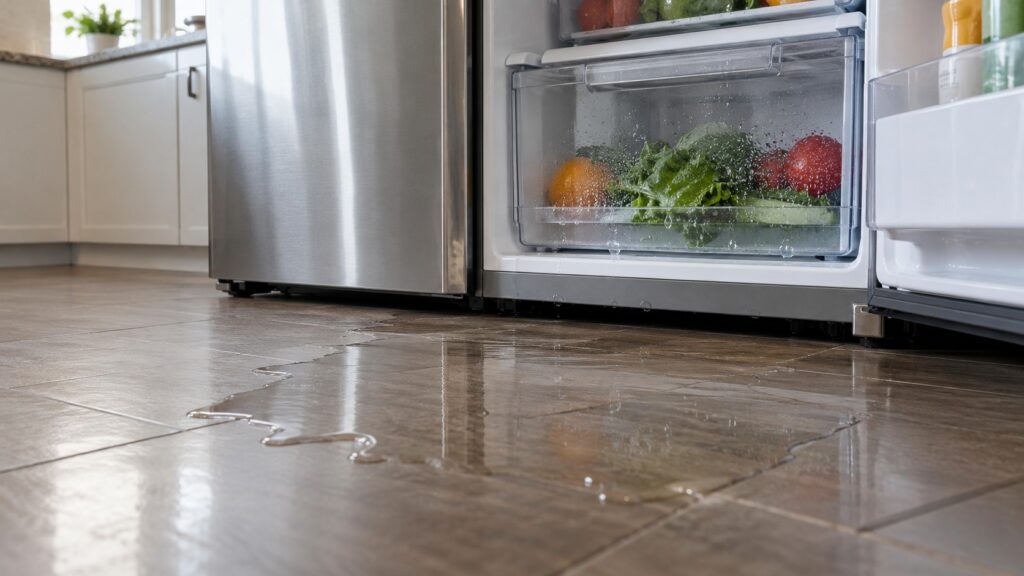
A frost-free refrigerator melts the ice that collects on its evaporator from time to time. Our refrigerator leaking water guide describes the drain as the small channel at the back of the freezer that carries melted frost down to a pan underneath the unit, where the water evaporates. If the drain clogs with ice or debris, water backs up and spills out of the freezer or under the drawers instead. That is why the leak guide lists a clogged defrost drain as the most frequent cause of water on the floor.
How do you tell a clogged defrost drain from other leaks?
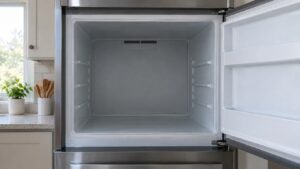
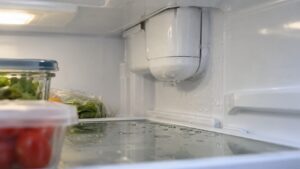
Where the water appears is the first clue. Our diagnostics guide says to look at the rear wall of the freezer with everything taken out, and then under the crisper drawers. Standing water there usually means the defrost drain has blocked, often with a plug of ice. Compare that with the other sources:
- Water strictly inside the freezer points to the drain.
- Water under the front of the refrigerator often points to the drain pan or a leveling issue.
- Water near the back usually points to the water supply line, as with an ice maker or dispenser. See our ice maker leaking water guide.
- Humid air meeting a poor door seal can also drip, so feel along the gasket for gaps.
What is the diagnostic order?
- If water is near the outlet or the cord, do not touch the plug: switch the breaker off from a dry spot. Otherwise unplug the refrigerator or switch its breaker off. Move the food into coolers and dry the floor so a new leak is easy to see.
- Take everything out of the freezer and look at the rear wall. Light, even frost is normal. A thick sheet of ice over the panel means the defrost system is not clearing the evaporator.
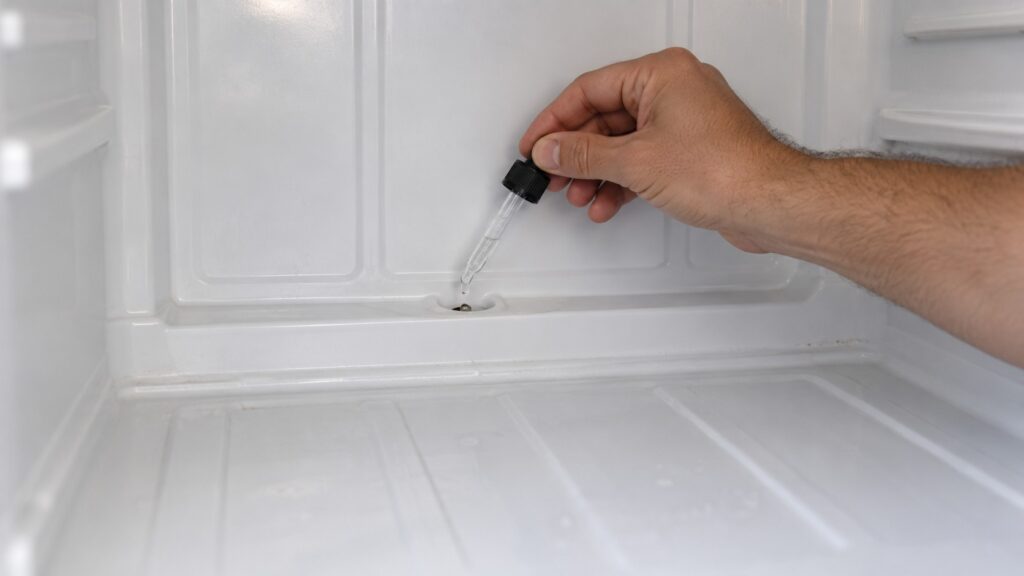
- Look for ice, water or debris at the small drain opening at the bottom of the freezer’s rear interior wall.
- Look under the crisper drawers for standing water.
- Pull the refrigerator out only as far as the supply line allows and check the drain pan for cracks or misalignment, then check the supply line connection for a loose fitting.
- Check the door gasket for gaps or tears.
- Check that the refrigerator is level, because a refrigerator tilted forward can send water to the front.
Do not remove the rear panel in the freezer to get at the drain, and do not push anything sharp into it. Our freezer guidance is the same: the interior panel hides electrical parts.
How do you clear a partly blocked defrost drain?
Our leak guide says that with the unit unplugged and the freezer empty, you locate the drain opening and flush it gently with warm water from a turkey baster or flexible tubing, which can clear a partial ice clog. Add the water slowly and a little at a time, and catch the overflow with towels. Do not use hot or boiling water, a metal rod or a wire. After flushing, check that water now runs freely through the drain, shows up in the pan below and does not pool in the freezer. If water does not drain freely, the blockage is further down the line, and our guide says that is better handled by a technician to avoid damaging the drain tube.
Why does the drain keep clogging or freezing?
A clogged drain once in a while can be debris. A drain that clogs again soon after you clear it is usually a symptom. Our leak guide says a persistently clogged drain can be a sign of a failing defrost heater or thermostat, and our freezer frost buildup guide describes the same family of parts for frost: a defrost heater, thermostat or timer that has failed stops clearing frost on schedule. When the evaporator is not defrosting, ice builds up, and eventually the fresh food compartment goes warm while the freezer still seems fine, as our fresh food warm, freezer cold guide explains. If you see a thick sheet of ice on the rear wall, do not chip at it.
What should you do to prevent a repeat?
Our guide suggests checking the defrost drain for buildup twice a year, inspecting the drain pan for cracks, especially after the unit has been moved, and replacing worn door gaskets before they fail. Keep food packages away from the rear wall so they do not block the drain opening, and avoid leaving the door ajar. For routine care, see Kenmore refrigerator maintenance.
When should you call a technician?
Call if water returns after you cleared the drain, the drain pan is cracked, the supply line fitting is leaking, ice builds on the rear wall or the refrigerator stops cooling. If water ever reaches electrical parts or outlets, switch the breaker off from a dry spot and do not use the refrigerator. Our Kenmore refrigerator repair technicians check the drain, the defrost parts and the water line. We are an independent repair company, not a factory service arm. You can book a visit, and a note of where the water first appeared will save time.