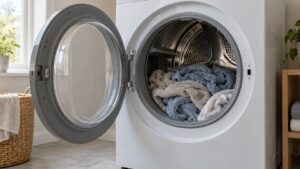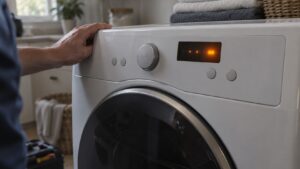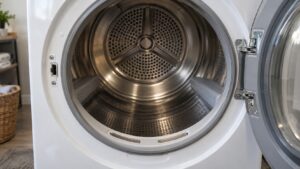
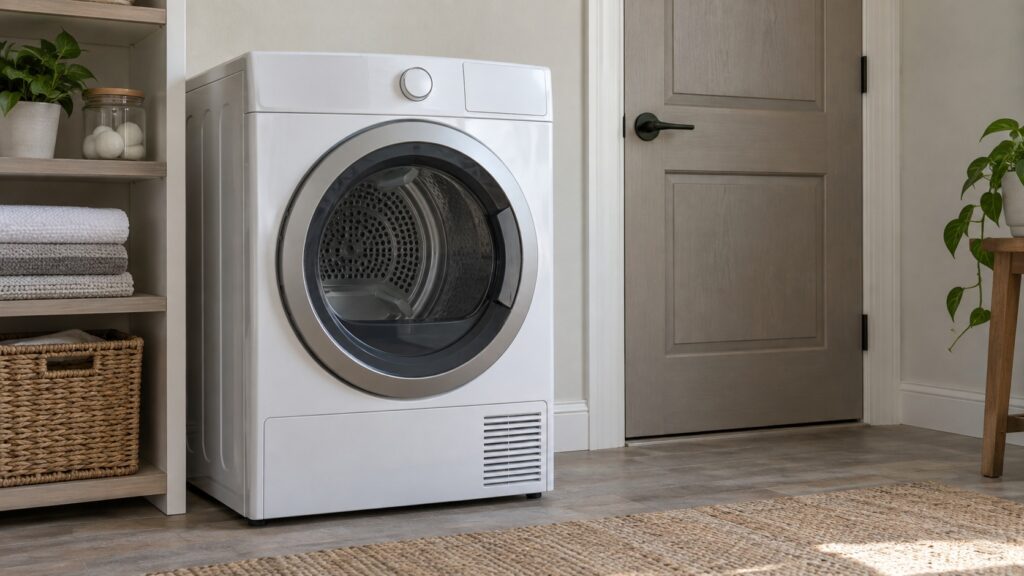
QuietPak is the sound-insulation package built into Kenmore’s LG-built SmartHeat dryer line, and it comes in two numbered tiers that show up constantly in listings and manuals without much explanation of what actually separates them. Choosing a kenmore quietpak dryer means deciding between the QuietPak 4 and the QuietPak 9, and the difference is not marketing — it changes how much sound insulation the cabinet carries and which drying features come with it.
What does QuietPak actually mean on a Kenmore dryer?
QuietPak is not a separate dryer model line — it is the noise-reduction package layered onto the SmartHeat platform, the LG-built dryer family sold under Kenmore and Kenmore Elite. Every QuietPak dryer shares the same SmartHeat drying logic, the same drum and motor design, and the same diagnostic code scheme; what changes between the tiers is how much the cabinet has been treated to keep that operation quiet, and in some model years, small differences in the drum-drive components used to get there. If you already own one, the number is on the model and serial tag rather than on a spec sheet, so confirming which tier you have is a five-second check rather than a guess from memory.
How does QuietPak 4 compare to QuietPak 9?
QuietPak 4 is the tier most commonly found on mainline Kenmore SmartHeat dryers — enough insulation to bring the dryer to a noticeably lower operating volume than an unpackaged model, without the added cost of the higher tier. QuietPak 9 adds further insulation layers around the drum housing and, on the models that carry it, a refined drum-drive assembly aimed specifically at reducing the drum-rotation noise that a laundry room shares with the rest of a house. For most households the practical question is not which tier sounds better in isolation, but whether the laundry area sits next to a bedroom, a home office, or an open living space where the difference is actually heard day to day.
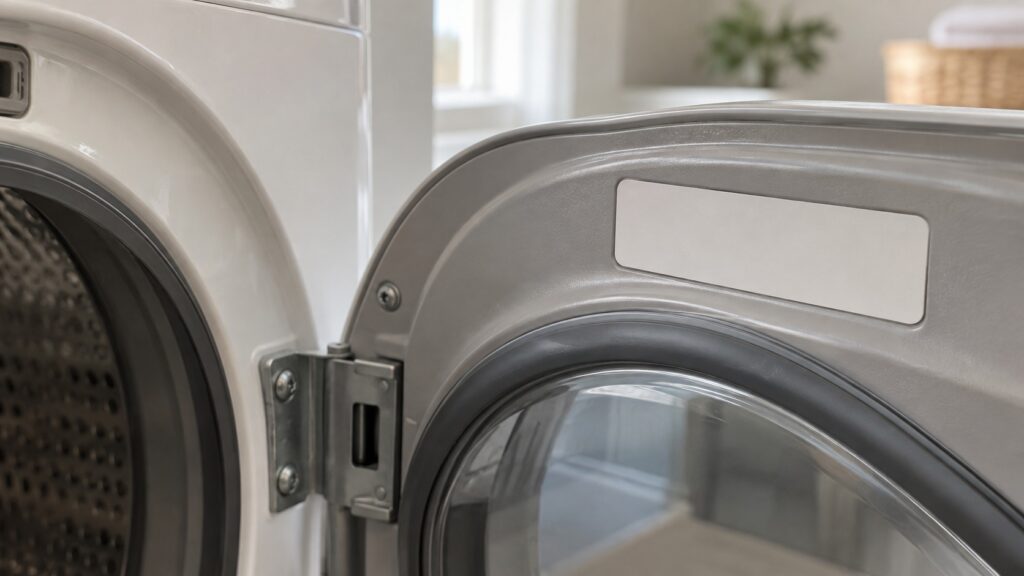
Does the QuietPak tier change how the dryer dries?
No — both tiers run the identical SmartHeat sensor-drying system, which measures moisture in the load rather than running a fixed timer, and both report the same code family when venting is restricted, covered in our d90/d95 code guide. Choosing between QuietPak 4 and QuietPak 9 is a decision about sound, not about drying performance, capacity, or cycle selection. Buyers who assume the higher number means a more capable dryer are comparing the wrong specification; capacity and cycle features are set elsewhere in the model number, not by the QuietPak digit.
Does the QuietPak tier affect maintenance or parts?
Both tiers depend on the same lint filter and vent-clearance routine to keep the SmartHeat sensor reading accurately, which our SmartHeat dryer maintenance guide covers in detail. The extra insulation in QuietPak 9 sits around the drum housing rather than inside the airflow path, so it does not change the lint or vent schedule. Where the tiers can diverge is in the drum-drive hardware on certain model years, which means a drum belt or roller ordered for one tier is not automatically guaranteed to fit the other — the full model number, not just “QuietPak,” is what a parts counter needs to pull the correct component.
Is a QuietPak dryer Whirlpool-built or LG-built?
QuietPak only appears on the LG-built side of the Kenmore dryer lineup. Kenmore also sells a separate 110-prefix dryer line built by Whirlpool, which uses an entirely different noise-insulation approach and a different fault-code scheme, including the PF power-interruption code. If a listing or a manual mentions QuietPak at all, you are looking at the LG-built platform; if it does not, check the model tag rather than assume, since the two platforms are not interchangeable for parts or for reading a fault code correctly.
What should you look for when comparing two listings side by side?
Two Kenmore SmartHeat dryers listed at different prices often look nearly identical in a photo, and the QuietPak number is frequently buried in the fine print of the spec sheet rather than called out in the headline features. Read the full model number in the listing, not just the marketing name, and compare it against a current one you can check the tag on if you already own a QuietPak dryer — the digits that follow the visible model prefix are where the tier is usually encoded. A listing that mentions decibel ratings or “extra-quiet operation” without naming a QuietPak number at all is worth a direct question to the seller before assuming which tier is included, since the marketing language around sound insulation is not standardized the way the tier number itself is.
It is also worth checking the age of the specific listing against our Kenmore dryer installation guide if you are buying used — a dryer that has been improperly vented for years can show wear on the same drum-drive components that distinguish the two QuietPak tiers, which makes an older QuietPak 9 unit feel no quieter than a newer QuietPak 4 if the drum bearings are already worn.
Which tier is worth paying more for?
If the dryer sits in a finished basement, a closet near a bedroom, or an open-plan space, the added insulation in QuietPak 9 is the kind of difference you notice every single load, and it is a reasonable reason to pay more for the same drying technology. If the laundry area is a garage, a detached utility room, or anywhere already somewhat isolated from living space, QuietPak 4 delivers the same SmartHeat drying performance for less, and the extra insulation in the higher tier will do less work than it costs. Either way, confirm capacity, moisture-sensing cycle options, and venting requirements independently of the QuietPak number — they are set by the rest of the model number, not by the tier of sound insulation.
We are an independent repair company and not a factory service arm. Pricing starts from a diagnostic visit and we confirm the estimate before any work begins. Kenmore dryer repair covers motors, switches, heating and controls on both dryer platforms, and you can schedule a visit online.