An ice maker is the component in a refrigerator most likely to be called faulty when it is actually just dirty or starved. Sensible kenmore ice maker maintenance is short — a filter on schedule, a quarterly clean of the bin and the chute, and an annual look at the water line — and it prevents the two complaints that make up most of the calls: ice that tastes wrong, and ice that stops arriving.
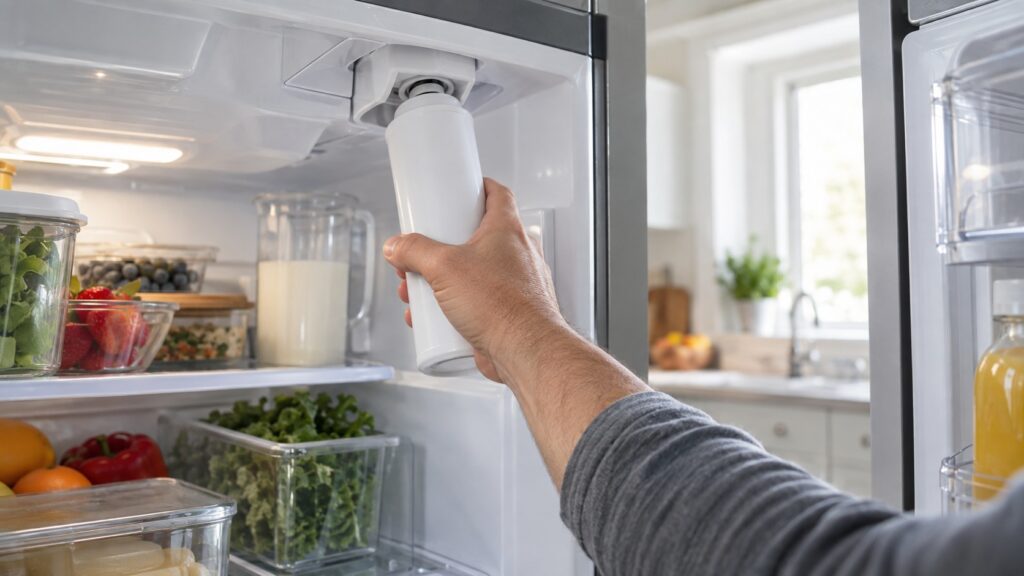
The filter, and what a late change actually does
The water filter serves both the dispenser and the ice maker, and as it clogs the flow drops. The first symptom is not bad-tasting water — it is smaller cubes, then hollow ones, then a maker that fills partially and produces very little.
That is why “the ice maker has failed” so often turns out to be a filter nobody has changed. Six months is the usual interval, less in hard water or where sediment is a problem. Write the date on the filter with a marker when you fit it, because nobody remembers otherwise.
After changing one, run several gallons through the dispenser to purge air and carbon fines, and discard the first two or three batches of ice. Air trapped in the line is also the reason a newly changed filter sometimes produces spitting at the dispenser and a few malformed cubes.
Cleaning the bin and the chute
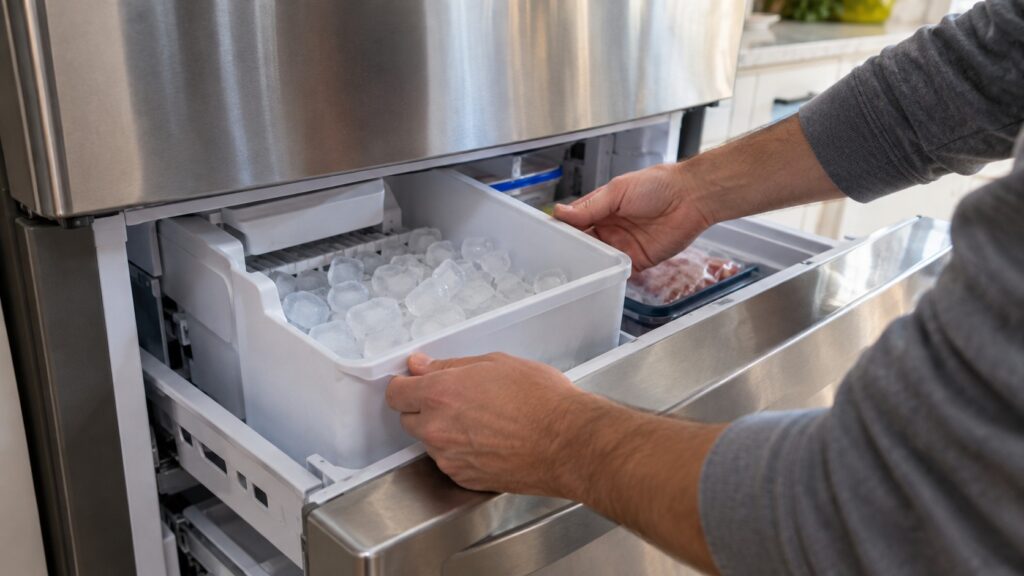
- Empty the bin completely and take it out of the freezer.
- Wash it in warm water with a mild dish liquid. Avoid hot water on a frozen bin — thermal shock cracks plastic.
- Dry it fully before it goes back. Residual moisture freezes into a sheet at the base and jams the auger.
- Wipe the chute in the door with a damp cloth. This is where odors and residue collect, and it is rarely cleaned.
- Check the flap at the end of the chute closes properly — a flap held ajar by ice lets warm, humid air into the bin continuously.
That last point causes a specific and very common problem: cubes fusing into a solid block. Warm air enters, partially melts the surface of the ice, and it refreezes as one mass. If you are chipping ice out of the bin regularly, look at the flap and the door seal before suspecting the maker.
Why ice tastes wrong
Ice is porous and it sits in a freezer full of food for weeks. It absorbs whatever is in there, which is why old ice tastes of the last strongly flavored thing you stored. The fix is circulation — use the ice, and if the household does not use much, empty the bin every few weeks anyway.
Other causes worth ruling out: an overdue filter, a new plumbing connection that has not been flushed, and food stored uncovered in the freezer. A properly sealed container solves more taste complaints than any appliance part.
Freezer temperature, the invisible cause
An ice maker needs the freezer genuinely cold to work. A freezer running a few degrees warm than it should will still keep food frozen while ice production drops noticeably or stops, because the mold never reaches the temperature that triggers a harvest.
Check with a thermometer placed between packages rather than relying on the display. If the freezer is warm, the ice maker is a symptom rather than the problem, and the causes are the usual ones: condenser coils, door seals, an overloaded compartment or a defrost fault. Our refrigerator maintenance guide covers those.
How much ice is normal, and when a drop means something
People judge an ice maker against a memory rather than a measurement, and the memory is usually of a machine that was new in a household that used less ice. A household ice maker in a refrigerator produces a modest amount per day, and that figure falls in hot weather, after a large gathering that emptied the bin, and any time the freezer door has been opened repeatedly.
So a temporary drop in output is often the appliance working normally under a load it cannot keep up with. What matters is the trend over weeks. Output that has been quietly halving over a year points at the filter, the supply or scale in the line. Output that stopped overnight points at a part or at the freezer temperature.
The annual look at the water supply
With the refrigerator pulled out, look at the line running to it. What you are checking for: a kink where the appliance was pushed back, corrosion or mineral crust at the connections, a saddle valve that has partly closed over time, and any dampness at the fittings.
Saddle valves deserve a mention. They were common on older installations, they clog with mineral deposits, and they are a frequent cause of a slow decline in ice production over years. If your refrigerator is fed by one, replacing it with a proper shutoff valve is worth doing next time the appliance is out.
Also check the line is not pinched between the appliance and the wall. Our ice maker installation guide covers how the supply should be run.
What maintenance will not fix
A maker that fills but never harvests, one that overfills and freezes the mold into a block, a broken fill tube, a failed water inlet valve or a seized auger motor are parts rather than housekeeping. So is a dispenser that runs but delivers nothing while the bin is full, which usually means the auger or its drive.
Our not making ice guide and the not dispensing guide separate those cases from the maintenance ones.
When to call
Call when production has stopped with a fresh filter and a cold freezer, when water is leaking behind or under the appliance, when the mold overfills and freezes solid, or when the dispenser motor runs without delivering ice.
We are an independent repair company and not a factory service arm. Pricing starts from a diagnostic visit and we confirm the estimate before any work begins. Kenmore ice maker repair covers valves, molds, augers, sensors and controls, and you can schedule a visit online.