
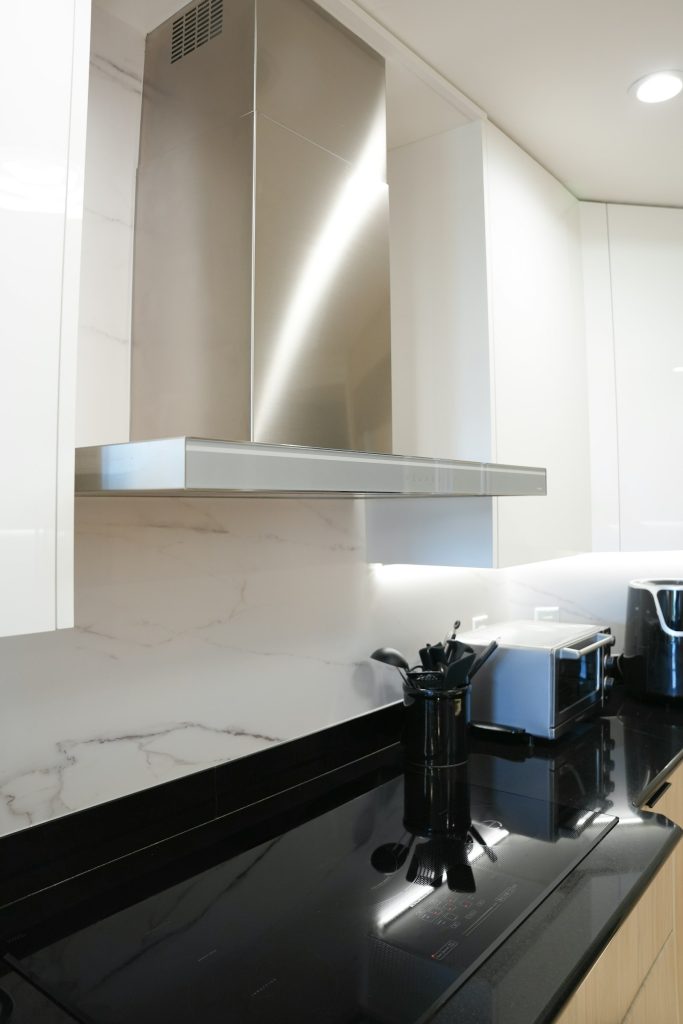
Consistent Kenmore range hood maintenance is one of the cheapest ways to avoid the fan and airflow problems we see on service calls, and it takes only a few minutes a month once you know what to check. Kenmore and Kenmore Elite range hoods are built by Broan under the 233 model prefix, and Broan designed these units around washable metal grease filters as the first line of defense — keeping that filter clean is the single highest-impact maintenance task on the whole unit.
Setting a Reminder
Because range hood filters are easy to forget compared with more visible kitchen tasks, it helps to tie the cleaning schedule to something you already do regularly, such as a monthly grocery deep-clean or a recurring calendar reminder. Consistency matters more than any single deep clean, since a filter that goes months without attention accumulates grease at a much faster rate than one cleaned on a predictable schedule.
Cleaning the Grease Filter
The metal mesh or baffle filter sitting under the hood should be removed and washed every two to four weeks in a typical household, more often if you cook with oil frequently or do a lot of stovetop frying. Hot water with dish soap, or a run through the dishwasher on many models, cuts through the grease buildup that otherwise restricts airflow and forces the fan motor to work harder than it should. A clogged grease filter is a quiet contributor to the motor wear that eventually shows up as a Kenmore range hood fan not working call.
Charcoal Filter Replacement (Ductless Models)
If your Kenmore hood is a ductless, recirculating model, it also uses a charcoal (carbon) filter to absorb odors before pushing air back into the kitchen. Unlike the washable grease filter, charcoal filters are not reusable — they need to be replaced roughly every three to six months depending on cooking frequency, since the carbon media loses its odor-absorbing capacity over time rather than getting visibly dirty. Skipping charcoal filter replacement is the most common reason a ductless hood keeps recirculating cooking odors even when the fan is running fine.
Fan and Housing Care
Wipe down the exterior housing and control panel regularly to keep grease film from building up around switches and buttons, since that residue can eventually work its way into the switch mechanism. Periodically check that the blower wheel spins freely and quietly; any new rattling, humming, or vibration is worth investigating before it becomes a full motor failure.
Ducted Systems: Don’t Forget the Duct
Grease filter maintenance handles what happens at the hood itself, but ducted installations also need the exterior duct run and termination cap inspected periodically for grease buildup and blockages, which we cover in our guide on a Kenmore range hood not venting. Filter maintenance and duct maintenance are two separate routines that both matter.
Seasonal Deep Clean
Beyond the regular filter routine, it is worth setting aside time once or twice a year for a deeper clean of the underside of the hood, the light lens covers, and the control panel surface, where grease film accumulates slowly even between normal filter changes. A degreasing kitchen cleaner works well here, and cleaning the light lens specifically also restores full brightness that grease film can dull over time without anyone really noticing day to day.
When Maintenance Isn’t Enough
Regular filter care prevents most premature failures, but motors, capacitors, and switches still wear out with age regardless of how well the hood has been maintained. When that happens, our experienced independent technicians diagnose the exact part responsible and replace it with genuine OEM components, backed by a 30-day labor warranty on the repair.
Schedule a maintenance visit or repair and we will inspect filters, fan operation, and ductwork as needed, with every repair backed by a 30-day labor warranty. For manufacturer filter part numbers, visit kenmore.com. See our full range hood repair service or find service near you.