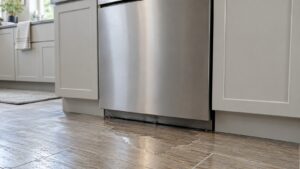
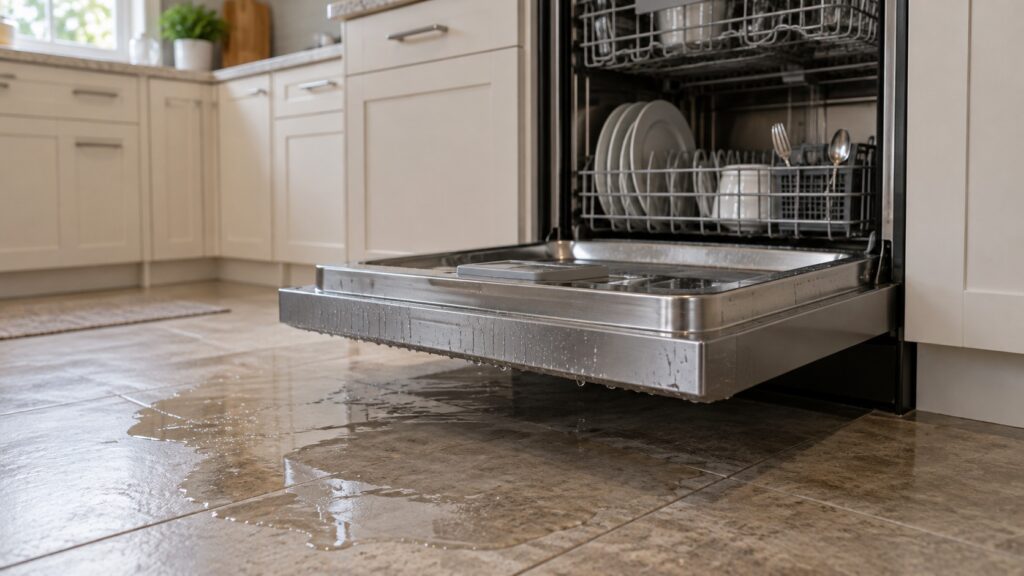
Water on the floor in front of the machine during a cycle is a door problem far more often than a plumbing one. When a kenmore dishwasher leaking shows up as a wet strip along the bottom edge of the door, the cause is one of five things: suds from the wrong detergent, a flattened or torn gasket, a door that is not pulling in squarely, a dispenser that is weeping, or a load that blocks the seal. This guide works through them in the order that separates them fastest, because the fix for the first costs nothing and the fix for the third is an adjustment rather than a part.
Is it suds rather than a seal?
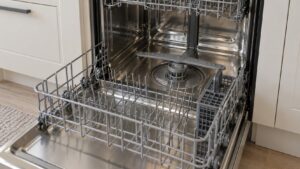
Run this test before touching a gasket. Open the door a minute after the wash stops and look into the tub. A layer of foam standing above the water line means the machine is making more suds than the seal was designed to hold back, and no gasket will contain that.
The usual cause is liquid dish soap used once in a pinch, which keeps foaming for several cycles afterward. Rinse aid overdose and very soft water do the same on a smaller scale. Clear it by running two cycles with no detergent at all and a tablespoon of cooking oil to break the foam, then measure detergent to the low end of the dispenser marks.
If the foam is gone and the floor stays dry, you are done. If the water is clear and the floor still gets wet, the door hardware is next.
How do you inspect the gaskets properly?
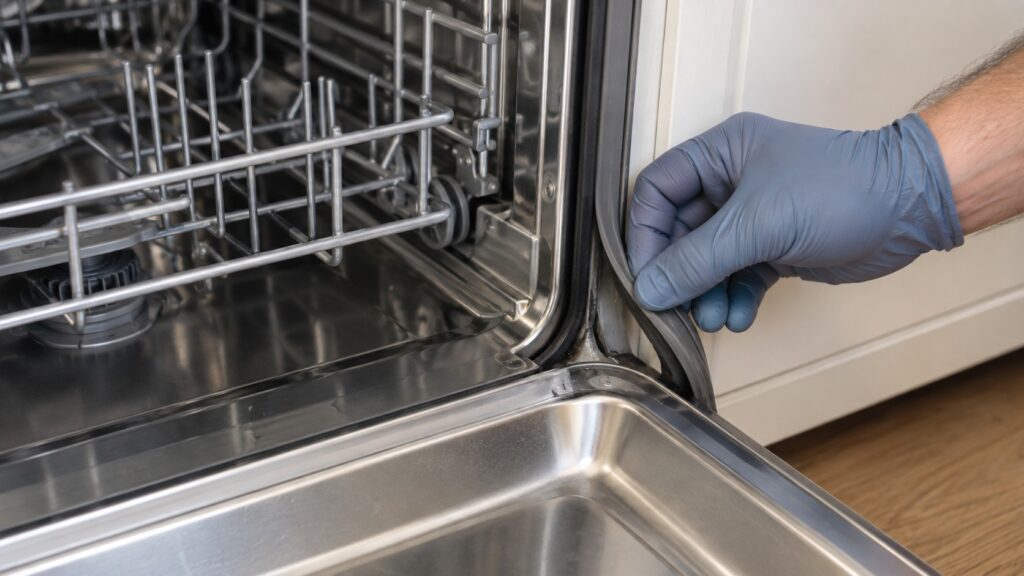
There are two seals, and owners usually check only one. The door gasket runs around the inner door panel or around the tub opening, depending on the build. The tub gasket sits in a channel at the sides and top of the opening, and on many Kenmore dishwashers it stops short at the bottom corners, where a separate lower seal or a splash shield takes over.
Wipe the whole length with a cloth and warm water, then run a finger along it. You are feeling for flat spots where the rubber has taken a set, hardened sections that no longer spring back, food debris bedded into the channel, and tears at the corners where the seal is stretched most. A seal that has gone hard will look perfect and leak anyway.
Pay attention to the bottom two inches on each side. That is where almost every door leak starts, because it is the part of the seal that sits in standing water at the end of every cycle.
What does a door that is out of square look like?
Close the door slowly and watch the gap along each side. It should be even from top to bottom on both edges. A gap that widens toward the floor on one side means the door is hanging low on that hinge, or that the machine itself is sitting on an uneven floor and has twisted in the opening.
Check the latch next. With the door shut, push it toward the tub: if it moves more than a hair before the latch stops it, the strike needs adjusting. Most builds allow about an eighth of an inch of travel at the latch plate or the strike screws, and taking up that slack is often the whole repair.
Then check the hinge cables at the lower sides of the machine. A frayed or unseated cable lets the door drop under its own weight instead of being held against the gasket, and the leak that follows always looks like a seal failure. Leveling and door-gap checks are part of setup, which our Kenmore dishwasher installation guide covers step by step.
Does a 665 build leak differently from a 587?
It does, and knowing the prefix saves a wasted part. The model number is on a tag along the tub edge, visible with the door open. A 665 prefix is a Whirlpool-built machine, where the tub gasket is a one-piece press-in seal and the lower corners are the usual failure point. A 587 prefix is a Frigidaire-built machine, where the door panel carries its own gasket and the dispenser flap is a more common weeping point.
The same difference shows up in parts ordering: two dishwashers of the same size and vintage, both sold as Kenmore, take gaskets that are not interchangeable. Always match the full number rather than the brand. Drainage faults, which look similar from the outside, follow a separate path in our 587 dishwasher not draining guide.
Which parts fix a door leak?
In practice the list is short: the tub gasket, the lower door seal or splash shield, the detergent dispenser assembly when its flap seal has failed, the vent assembly on builds where it sits high in the door, and the latch or strike when adjustment has run out of travel. Hinge cables and springs come next, and they matter more than their price suggests because they set how hard the door pulls in.
Gasket replacement is within reach for a careful owner: the old seal pulls out of its channel, the channel gets cleaned, and the new one presses in from the center outward so it does not end up stretched short at one corner. Keeping the seal clean in the first place is part of routine care, which our UltraWash maintenance guide sets out.
When should you stop and call?
Call when the leak continues with a clean, supple gasket and a square door, when water appears under the machine rather than in front of it, when the floor or the cabinet base has started to swell, or when the dispenser is weeping into the door panel where the wiring runs. Water inside a door panel and mains voltage share the same space, so that one is not an owner job.
We are an independent repair company and not a factory service arm. Pricing starts from a diagnostic visit, gaskets typically start from $40 in parts, and we confirm the estimate before any work begins. Kenmore dishwasher repair covers seals, latches, dispensers and pumps, you can call 1-844-351-4064, or schedule a visit online.