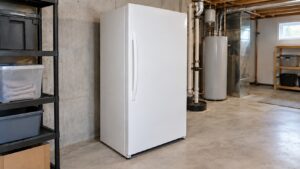
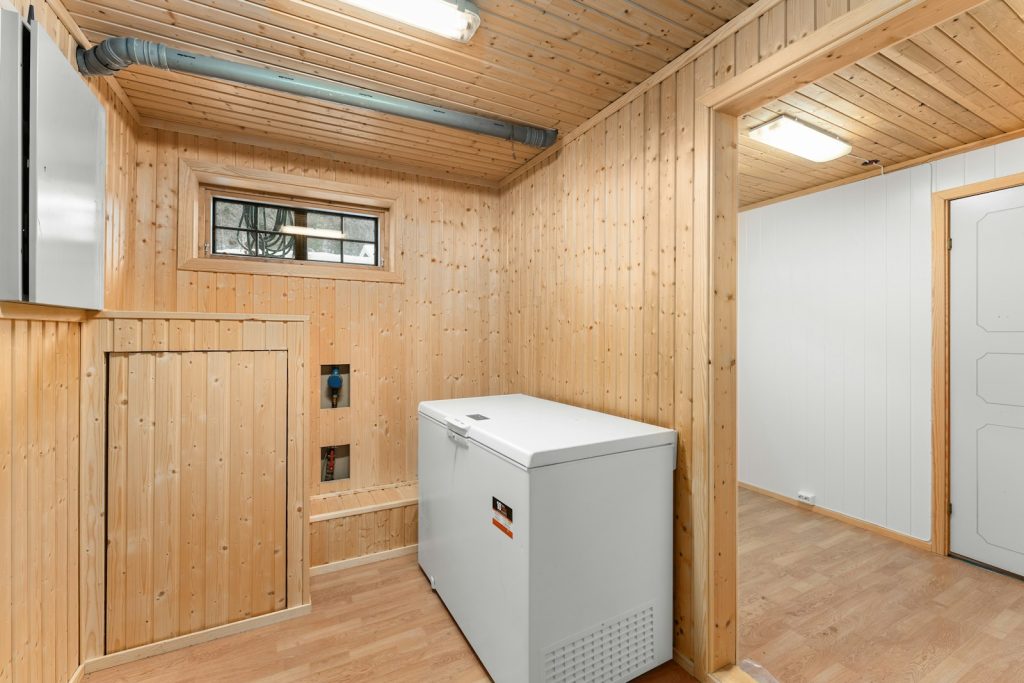
Kenmore freezer frost buildup shows up differently depending on whether you own an upright or a chest model, and understanding that difference helps you figure out whether what you are seeing is normal or a sign of a developing problem. Most standalone Kenmore freezers carry a 253 model-number prefix, meaning Frigidaire built the unit, and Frigidaire’s freezer platforms range from fully frost-free upright models to manual-defrost chest models, each with a different relationship to frost.
Upright Freezers: Frost Usually Means a Problem
Most upright Kenmore freezers use an automatic defrost cycle, so visible frost accumulating on interior walls or around the door is usually not normal and points to one of a few causes: a worn door gasket letting in humid air, a defrost heater or timer that has failed and stopped clearing frost on schedule, or a door that is not being closed fully or often enough. If frost is concentrated near the door edges, the gasket is the most likely suspect; if it is spread across the interior walls, the defrost system itself is more likely responsible.
Chest Freezers: Some Frost Is Normal
Chest freezers, on the other hand, are typically manual-defrost units by design, and light frost buildup over weeks or months of use is expected. The concern threshold is different here — you are watching for frost thick enough to interfere with lid closure, bury stored items, or reduce usable interior space, at which point a manual defrost (unplugging the unit and letting the ice melt with towels down to catch water) is the normal maintenance step, not a repair issue.
What Causes Excess Frost in Either Type
- A worn or torn door/lid gasket allowing warm, humid air to enter.
- Frequent door openings in a humid kitchen or garage environment.
- A defrost heater, thermostat, or timer failure (upright models only).
- Leaving the lid or door propped open, even briefly, during loading.
First Checks You Can Do Safely
Inspect the gasket for gaps by running a hand along the seal with the unit closed, and check whether frost is concentrated at the edges (seal issue) or spread evenly (defrost system, on upright models). For chest freezers, simply note how much time has passed since the last manual defrost before assuming something is wrong.
When to Call an Experienced Technician
If an upright Kenmore freezer develops heavy frost within just a week or two of a full defrost and gasket check, the defrost heater, thermostat, or timer likely needs replacement, and an experienced independent technician can confirm which component has failed rather than have you guess.
Ambient humidity also plays a bigger role than most owners expect, particularly for freezers kept in a garage, basement, or unconditioned utility room. A freezer in a humid environment will naturally accumulate frost faster than the same model in a climate-controlled kitchen, simply because more moisture-laden air enters the cabinet every time the door or lid opens. If your freezer sits in one of these locations, more frequent gasket checks and, for chest models, a somewhat shorter interval between manual defrosts are reasonable adjustments rather than a sign anything is actually wrong with the unit.
One more useful distinction: frost that forms into a solid sheet of ice rather than a light, powdery layer is more often a sign of a genuine defrost-system problem than normal humidity buildup, and is worth mentioning specifically when describing the problem to a technician.
Our freezer repair team handles both upright and chest Kenmore freezers with genuine OEM parts and a 30-day labor warranty. We are an independent service and not affiliated with Kenmore, Sears, or Transformco. If the unit is not reaching temperature at all rather than just frosting, see our Kenmore freezer not freezing guide, browse supported models, or check service areas. For manufacturer information, visit kenmore.com. Ready for service? Schedule service today.