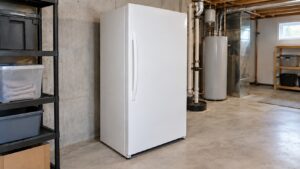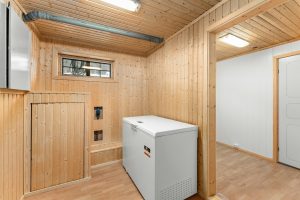

A Kenmore freezer not freezing properly is a frustrating problem, and unlike Kenmore refrigerators, most standalone Kenmore freezers do not display digital error codes at all — this is a genuinely thin category within the Kenmore lineup, dominated by Frigidaire-built units carrying a 253-prefix model number. That means diagnosis here is symptom-based rather than code-based, which is actually more straightforward in some ways.
Why Kenmore Freezers Skip Digital Codes
Kenmore does not manufacture appliances itself, and its standalone freezer lineup has always been a smaller product category than its refrigerators. Most Kenmore chest and upright freezers on the market carry a 253 prefix, meaning Frigidaire built them, and Frigidaire’s standalone freezer platforms are largely mechanical rather than digitally controlled, so there is no error-code display to read the way there is on an LG-built 795-series refrigerator.
What Causes a Kenmore Freezer Not to Freeze
The most common culprits are a worn door or lid seal letting in warm air, condenser coils clogged with dust that reduce cooling efficiency, a thermostat that has drifted out of calibration or failed, a start relay or capacitor that prevents the compressor from running properly, or (particularly on chest freezers) a unit that has simply been overloaded past its rated capacity, forcing the compressor to run constantly without ever reaching set temperature.
First Checks You Can Do Safely
- Check the door or lid gasket for gaps, tears, or a weak magnetic seal.
- Vacuum the condenser coils, typically located on the back or bottom of the unit.
- Confirm the thermostat dial has not been bumped to a warmer setting.
- Listen for the compressor running — if silent, the start relay or compressor may be responsible.
- Check that the freezer is not overloaded beyond the manufacturer’s recommended capacity.
When to Call an Experienced Technician
If the door seal is intact and the coils are clean but the unit still is not reaching temperature, the problem is likely internal — a failing compressor, a bad thermostat, or a refrigerant leak — and needs an experienced independent technician with the right tools to diagnose safely. Sealed-system work should never be attempted as a DIY repair.
It also helps to note how the freezer is behaving in more detail before calling for service: is the compressor running constantly without ever reaching temperature, cycling on and off unusually often, or not running at all? Constant running with no result usually points toward a refrigerant or compressor issue, frequent short cycling often points toward a thermostat or start relay problem, and a silent compressor suggests either a power supply issue or a compressor that has failed outright. Sharing these details when you call helps a technician arrive with the most likely parts already in hand, which can shorten the repair to a single visit.
How to Prevent It From Happening Again
- Vacuum coils twice a year.
- Replace a worn gasket as soon as you notice a weak seal.
- Keep the freezer within its rated loading capacity.
- Give the unit clearance on all sides for proper airflow.
One more detail worth checking before calling: confirm the freezer is plugged directly into a wall outlet rather than a power strip or extension cord, since some strips do not reliably supply the steady current a compressor needs on startup, and that alone can mimic a compressor failure.
Our freezer repair technicians regularly diagnose Frigidaire-built Kenmore freezers using genuine OEM parts, backed by a 30-day labor warranty. We are an independent service and not affiliated with Kenmore, Sears, or Transformco. If frost is building up rather than a lack of cooling, see our Kenmore freezer frost buildup guide, browse supported models, or find service near you. For manufacturer resources, visit kenmore.com. Ready for a diagnosis? Schedule service today.