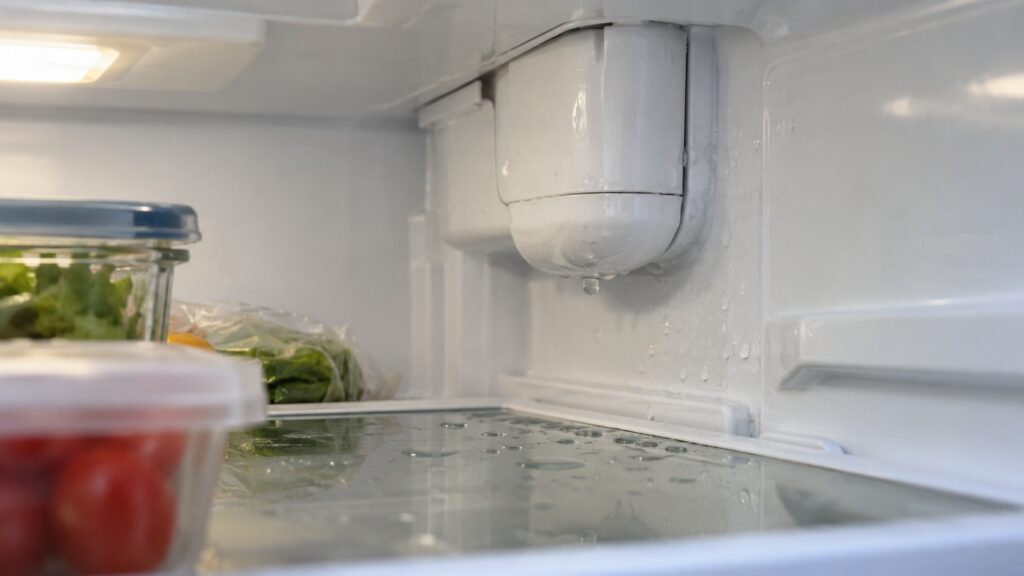
A Kenmore refrigerator filter housing drip, meaning water dripping from the socket where the water filter sits, usually comes from a filter that is not fully seated, an old or damaged filter, a housing or seal that has been disturbed, or a supply line fitting that has loosened behind the refrigerator. In most cases you can find the cause with a few safe checks that involve no tools. This guide shows how to tell where the water is really coming from, how to reseat or replace the filter, what to check on the supply side and when a drip is a sign to shut the water off and call a technician. Filter locations differ between Kenmore models, so use your owner’s manual for the location and the turning direction.
Why does water drip from the filter housing?
The filter housing is the place where the water line meets the cartridge, so any weakness there shows up as a drip. Our refrigerator maintenance guide notes that water filters lose effectiveness and can begin restricting flow, and that a filter well past its replacement date can strain the dispenser and the ice maker. A restricted filter pushes pressure back into the connection, and a cartridge that was never locked fully into place leaves a gap. The usual causes, from most to least likely, are a cartridge that is not fully seated, a filter that has been in too long, a damaged housing or seal, and a loose connection on the supply side.
How do you tell whether it is the housing or another leak?
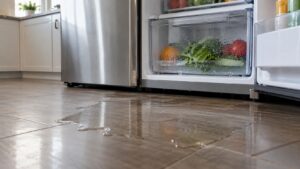
Dry everything with a towel, including the filter, the socket and the floor. Then run the dispenser into a glass for a few seconds and watch the filter area, and then wait. If water appears only while the dispenser runs, the filter and its seal are the likely source. If it drips while nothing is running, check the supply line connection. Our refrigerator leaking water guide adds the pattern for the rest: water strictly inside the freezer points to the defrost drain, water under the front often points to the drain pan, and water near the back usually points to the supply line connection. Compare those with where your drip is. Our ice maker leaking water guide covers water that comes from the ice maker line.
How do you reseat or replace the filter?
- Stop the water flow to the dispenser by following the manual. If you are not sure how, shut the household supply valve behind the refrigerator first.
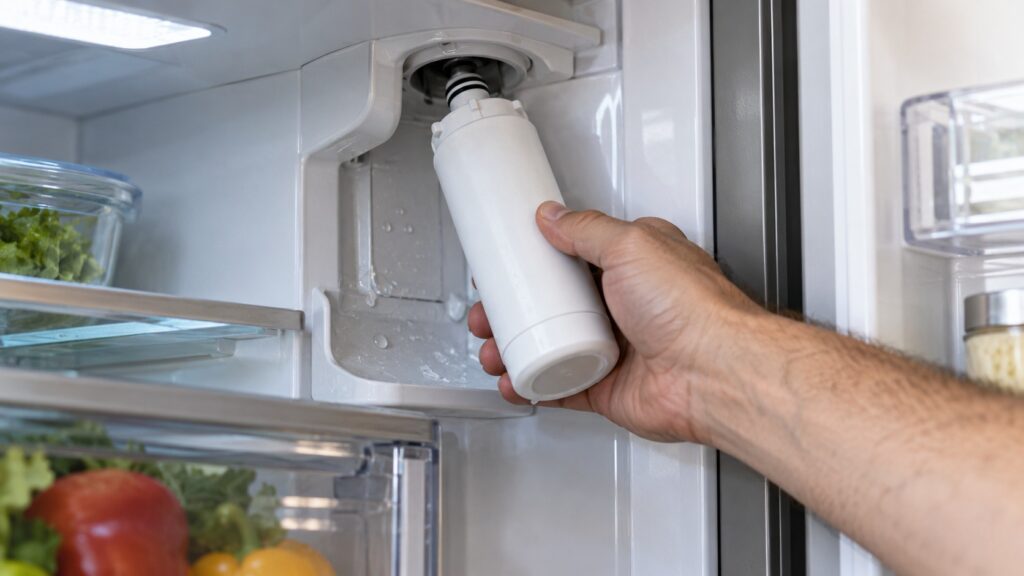
- Place a towel under the filter and take the cartridge out the way the manual shows. Many filters turn a short distance and then pull out; others push in and release with a button.
- Look at the old filter’s end and at the socket for cracks, a twisted seal or debris, and wipe the socket with a clean cloth.
- Insert the cartridge straight and turn or push it until it locks as your manual describes.
- Open the water supply again and run the dispenser for a few minutes into a container to clear air, as the manual advises.
- Dry the area and watch it for a few hours.
Use the filter listed for your exact model number. A cartridge for a different refrigerator can look similar and still not seal. Our parts lookup guide explains how to match it by model prefix.
What should you check on the water supply?
With the refrigerator out only as far as the supply line allows, look behind it for a loose compression fitting or a kinked line. Our leak guide lists a loose or damaged water line connection at the back of the unit as a major source of leaks and says to check the fitting on the supply line. Do not overtighten a fitting with a wrench, and do not replace parts of the line yourself unless you are comfortable doing so; shut the household valve and call a technician. On LG-built Kenmore refrigerators with a 795 or 796 prefix, our Er gF page says low household water pressure or a faulty flow meter can affect the dispenser; it says the supply generally needs to be at least 20 psi, so a weak dispenser together with a drip is worth checking at a nearby fixture. If water reaches the floor near an outlet, switch the refrigerator off at the breaker from a dry spot.
When does a filter drip need a technician?
Call if the filter drips again after you reseat it with a fresh, correct cartridge, if the housing is cracked, if water appears behind the refrigerator or on the floor repeatedly, or if the dispenser is weak. A cracked housing or a leaking inlet is not a part to patch. Our Kenmore refrigerator repair technicians test the housing, the inlet valve and the supply fittings and replace only the part that has failed. We are an independent repair company, not a factory service arm. For the cost picture, see Kenmore refrigerator repair cost. You can book a visit with the model number ready.
How do you prevent a filter drip from coming back?
Replace the filter on schedule. Our maintenance checklist suggests replacing the water filter every three months if your model uses one, but follow the interval in your manual for your own filter. Write the date on the cartridge when you fit it, so you do not have to guess. Keep the area around the filter dry and clean, and check it each time you wipe the door gaskets. After any move of the refrigerator, look at the supply line and fittings.