An oven gets far less routine attention than a dishwasher or a washer, mostly because nothing about it demands it the way a clogged filter or a smelly drum does. That is exactly why kenmore wall oven maintenance is worth a short seasonal routine rather than none at all: the door seal, the vent, and the self-clean cycle quietly determine how evenly the oven heats and how long the temperature sensor and door components last before they need replacing.
Why does a door gasket matter for something other than heat loss?
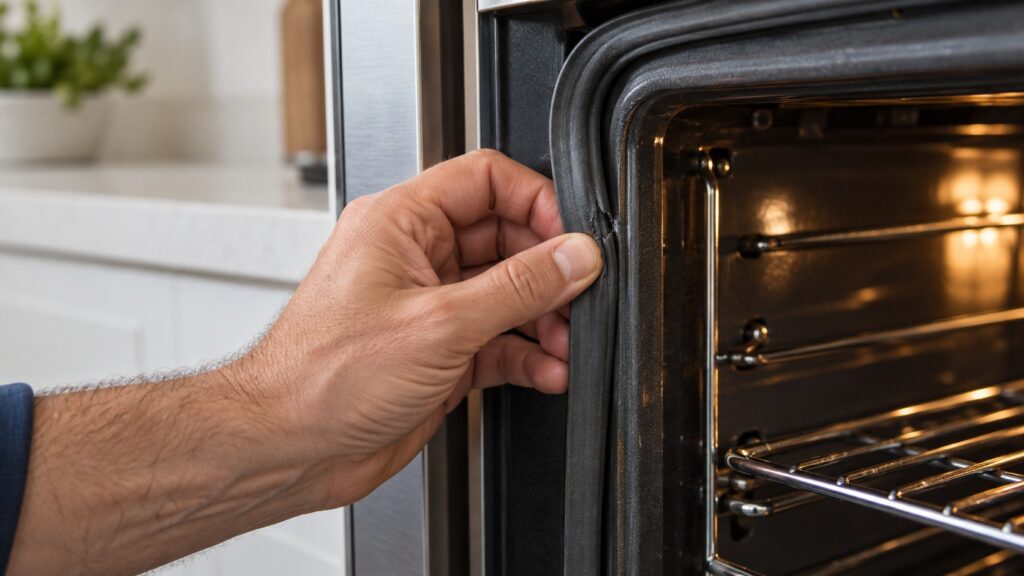
The rubber or fiberglass gasket around a Kenmore wall oven door does more than keep warm air inside during a bake. A gasket that has flattened in one section, or torn near a corner, lets heat escape unevenly rather than uniformly, and an oven working to compensate for that loss runs its element or burner longer per cycle than it should. Over months, that extra runtime is exactly the kind of added cycle count that shortens the working life of a bake element or an igniter. Checking the gasket by running a hand slowly around its perimeter with the oven off and cool, feeling for a section that does not spring back, takes under a minute and catches the problem well before it shows up as an uneven-heating complaint.
How often should you run the self-clean cycle?
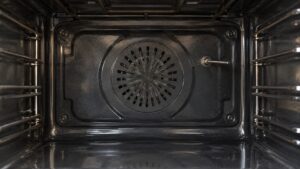
A self-clean cycle run too rarely lets spills bake on repeatedly until the cycle has to run long and hot enough to strain the door lock and the seal around it; run far too often, the same high heat accelerates wear on the same parts it is meant to protect the interior from. A few times a year, timed to when spills have visibly accumulated rather than on a fixed calendar, is the practical middle ground most Kenmore wall ovens are designed around. Always remove wire racks before running the cycle — the extreme interior temperature can discolor or warp them — and never attempt to force the door open mid-cycle if the lock has engaged; it will release on its own once the interior has cooled enough.
What keeps the interior from needing self-clean as often?
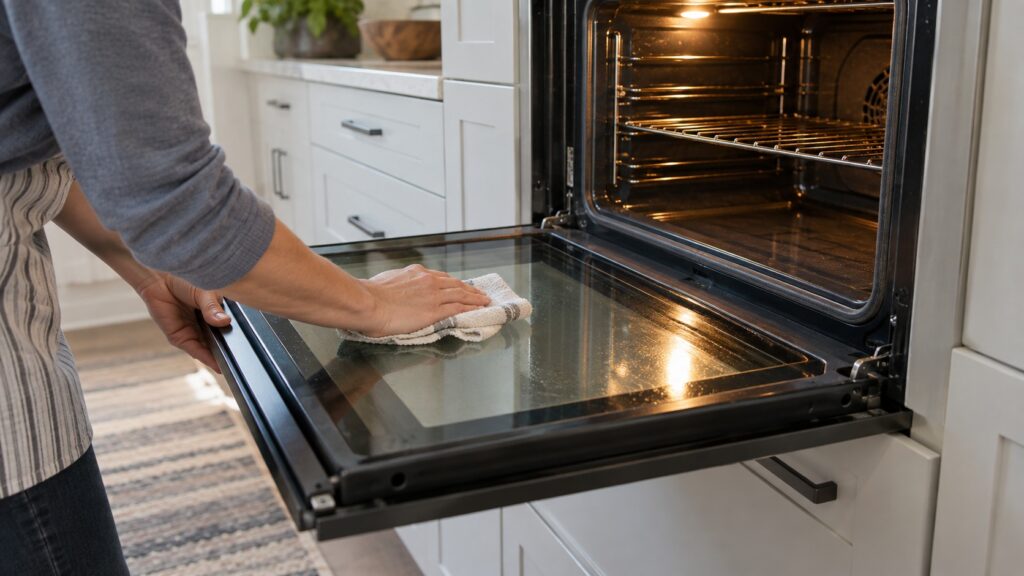
Wiping spills while the oven is still slightly warm, not hot, lifts far more residue with far less effort than scraping a fully cooled, baked-on spill later. A simple habit of a damp wipe after any boil-over or drip, rather than waiting until the next scheduled clean, is what actually reduces how often the high-heat self-clean cycle needs to run at all — which in turn is what protects the door seal, the lock, and the temperature sensor from unnecessary wear over the oven’s life.
Why does the vent opening matter more than it looks like it should?
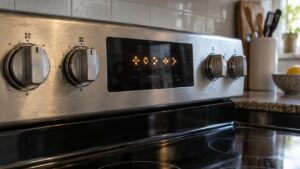
Most Kenmore wall ovens vent through an opening near the cooktop or along the rear of the cabinet, and that opening has one job: let the oven exhaust hot air so its internal sensor reads an accurate temperature. A vent blocked by a stray sheet of foil, a stored baking sheet, or built-up grease changes how the oven’s air circulates internally, which can produce the same uneven-baking symptoms covered in our oven not heating evenly guide without any component actually having failed. Checking that this opening is clear takes seconds and belongs in the same seasonal pass as the gasket check.
What should a yearly hinge and lock check cover?
Open and close the door slowly once a year and watch how it seats. A door that has begun to sag on its hinges puts uneven pressure on the gasket at the point where it seats last, and over time that uneven pressure is what turns a healthy gasket into one with a flattened section. This is also the moment to confirm the self-clean door lock engages and releases smoothly — a lock that catches or drags is worth addressing before it becomes the kind of intermittent fault that is hard to reproduce for a technician later.
While the door is open for this check, take a moment to look at the glass panels themselves if the oven has a double-pane door. A gap between the panes that has widened, or condensation trapped between them, points at a seal around the glass rather than the main door gasket, and it is worth noting separately since the two are different repairs even though both sit in the same door assembly. Photographing the gap with a phone camera against a plain background, rather than trying to describe it over the phone, gives a technician a far clearer starting point than a verbal description alone.
When does a maintenance issue turn into a repair?
A gasket that has visibly torn, rather than just flattened, should be replaced rather than left in place — it will not recover, and every bake after that point runs less efficiently than it should. A replacement gasket is a straightforward, comparatively low-cost part on most Kenmore wall ovens, which is exactly why catching the tear early — before it forces the oven to compensate with longer element runtime for months — keeps this a small repair instead of letting it contribute to a bigger one down the line. A door that will not lock at the start of a self-clean cycle, or will not release afterward, points at the same lock hardware discussed in our temperature sensor code guide if a fault code accompanies it, though a lock complaint by itself without a code is usually a mechanical issue rather than a sensor fault. Either way, this is where a seasonal check turns into a service call rather than a wipe-down, and catching it at that stage is almost always less involved than waiting until the oven stops heating altogether.
We are an independent repair company and not a factory service arm. Pricing starts from a diagnostic visit and we confirm the estimate before any work begins. Kenmore oven repair covers doors, hinges, seals, heating and controls, and you can schedule a visit online.