A refrigerator has exactly three things that move: two fans and a compressor. That is why a kenmore refrigerator making noise is one of the more satisfying faults to chase — the sound itself names the part, as long as you first work out where you are hearing it. A whine from inside the freezer is the evaporator fan. A rattle or buzz from the back panel at floor level is the condenser fan or the compressor mounts. A click every few minutes with nothing starting is the start relay, and that one deserves attention rather than patience.
Which noises are normal?
Modern units are louder in some ways than the ones they replaced, because high-efficiency compressors run longer at lower speed instead of cycling hard. A steady hum you can hear from the next room but not from the hallway is normal. So are occasional pops as plastic liners expand, a gurgle after the compressor stops, and a hiss or sizzle during a defrost cycle as melt water reaches the warm drain pan.
What is not normal is a change. A new pitch, a new rhythm, or a sound that appears when a door is opened and stops when it closes all mean something mechanical has altered. Judge by the change rather than by the volume.
Where is the sound actually coming from?
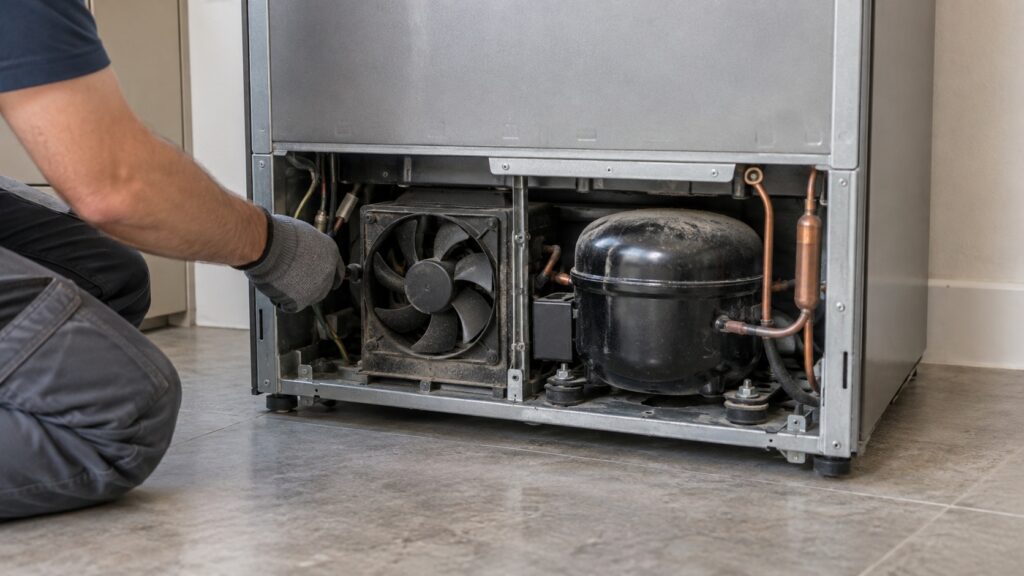
Do this with a helper or a phone recording. Open the freezer door and listen: if the sound gets louder and then stops within a second or two, you are listening to the evaporator fan, which most builds switch off with the door. Close the door, wait, and listen at the bottom of the back panel: a sound that is loudest there belongs to the condenser fan or the compressor.
Then pull the unit out and unplug it. Place a hand flat on the compressor shell — carefully, it runs hot — after it restarts. A vibration you can feel through the cabinet frame, not just the shell, points at hardened mounts rather than the compressor itself. The step-by-step approach in our Kenmore refrigerator diagnostics guide covers the rest of the walk-around.
Why does a squeal come from inside the freezer?
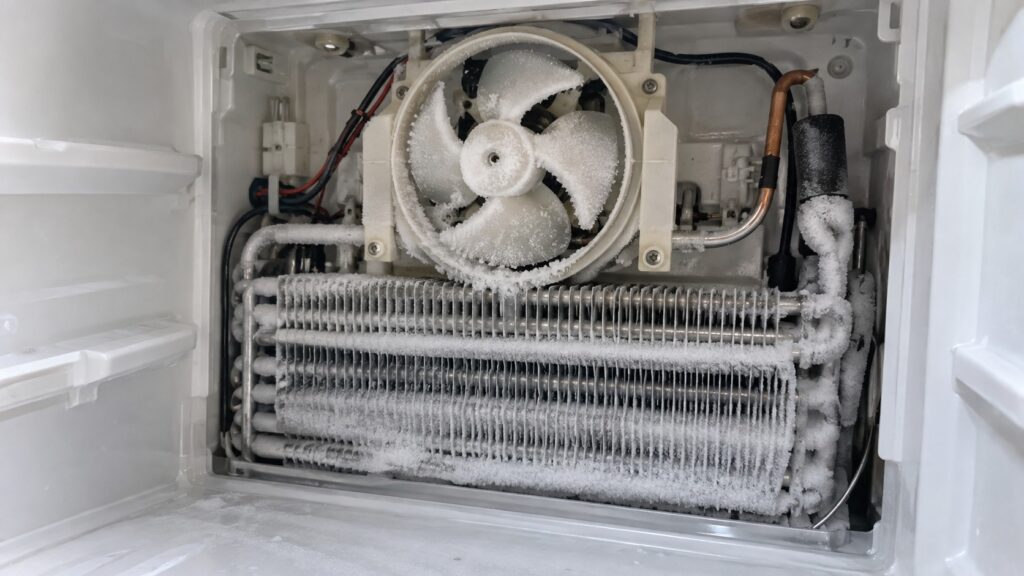
The evaporator fan sits behind the rear freezer panel and pushes cold air over the coil and up into the fresh food section. Two things make it squeal. Its bearings dry out, which produces a steady whine that rises with the compressor. Or frost builds on the coil until the blade starts clipping ice, which produces an intermittent chatter that is loudest right after the door closes.
The second version is the more important one, because the frost that touches the blade also blocks the airflow. On LG-built Kenmore refrigerators with 795 and 796 prefixes, that failure has its own code: our Er FF guide covers the evaporator fan fault the control reports once the fan stops turning as commanded.
If the noise is paired with a fresh food section that is getting warm while the freezer stays cold, treat it as an airflow problem first — our not cooling guide follows that branch.
Is a rattle from the back the condenser fan?
Usually, and it is often free to fix. The condenser fan sits near the compressor and pulls room air across the condenser coil. Anything that lands in the compartment — a bottle cap, a chunk of hardened dust, a strip of packing — ends up against the blade, and the fan turns that into a rattle far louder than the object deserves.
With the unit unplugged, take the rear access panel off, vacuum the coil and the compartment, and spin the blade by hand. It should coast smoothly for a turn or two. A blade that grinds, or that has play when you rock it on its shaft, is a motor at the end of its life. Coil cleaning is on the schedule in our refrigerator maintenance guide, and it prevents the overheating that kills these motors early.
One more check while you are back there: the drain pan. A pan that has shifted out of its seat buzzes against the frame every time the compressor runs, and owners have replaced fan motors over it.
What does a clicking compressor mean?
A click every three to five minutes, with a faint hum for a second and then silence, is the start relay energizing the compressor and the overload protector cutting it back out. The compressor is trying to start and failing.
Sometimes the relay is the failed part and the compressor is fine, which is a modest repair. Sometimes the compressor windings have gone and the relay is reporting it honestly, which is not. Either way, the clicking cycle should not be left running for days: repeated stalled starts heat the windings, and a unit that might have needed a relay can end up needing far more. Unplug it, move the food, and get it looked at.
There is a cheaper impostor worth ruling out first. A unit that is not level, or that stands with one roller on a floor seam, transmits ordinary compressor vibration into the cabinet and the wall behind it. Put a level on the top edge, adjust the front feet until the cabinet is steady and the doors swing closed on their own, and give the back at least an inch of clearance from the wall. A surprising number of noise calls end there, before any panel comes off.
When should you call?
Call when a fan grinds or has shaft play, when clicking repeats without cooling, when the cabinet shakes hard enough to move items on top, or when a freezer noise comes with frost on the back panel. Leave the sealed system alone entirely — the compressor and its lines are not an owner-serviceable area, and the coil compartment carries live terminals even when the unit is quiet.
We are an independent repair company and not a factory service arm. Pricing starts from a diagnostic visit, fan motors typically start from $70 in parts, and we confirm the estimate before any work begins. Kenmore refrigerator repair covers fans, relays, defrost systems and controls, you can call 1-844-351-4064, or schedule a visit online.