A freezer looks like the easiest appliance in the house to install: put it somewhere, plug it in, wait. Most of what goes wrong with kenmore freezer installation comes from exactly that assumption. Where it stands, how much air it has, whether the room is heated and how long it sat on its side in the van all matter, and all of them are decided on delivery day.
The waiting period nobody mentions
A sealed refrigeration system contains oil that lives in the compressor. Lay the appliance on its side or its back and that oil migrates into the refrigerant lines. Start it in that state and the compressor runs without proper lubrication while pushing oil through places it does not belong.
Standing the freezer upright lets the oil drain back. Several hours is the usual guidance, and longer does no harm. If you do not know how it traveled — a delivery you did not watch, a second-hand unit — assume the worst and wait. It is the cheapest insurance available on the whole installation.
Where it will actually live
Freezers reject heat from the back or from coils underneath, and they need air to do it. Pushed tight into an alcove or boxed in by shelving, the appliance recirculates its own warm air, runs constantly and never quite reaches temperature. Read the clearance figures for your model and treat them as minimums rather than suggestions.
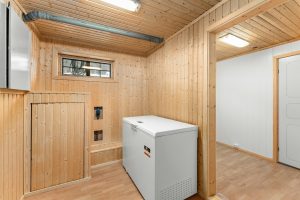
Think about the floor too. A full chest freezer is very heavy, and a wooden floor over a crawl space is worth a thought before you fill it. Keep the appliance out of direct sunlight and away from a boiler, a radiator or a range, all of which raise the ambient temperature it has to work against.
Garages, basements and the cold-room problem
This is the single most misunderstood point in freezer installation. A freezer’s thermostat measures the cabinet, but in a cold room the cabinet drifts warm slowly and the compressor may not be called on for long periods — meanwhile the contents warm past the safe point without the appliance ever looking wrong.
Some models are rated for unheated spaces and handle low ambient temperatures properly. Many are not. Check the rating before committing to a garage, because the failure mode is silent and you discover it when the food is already gone.
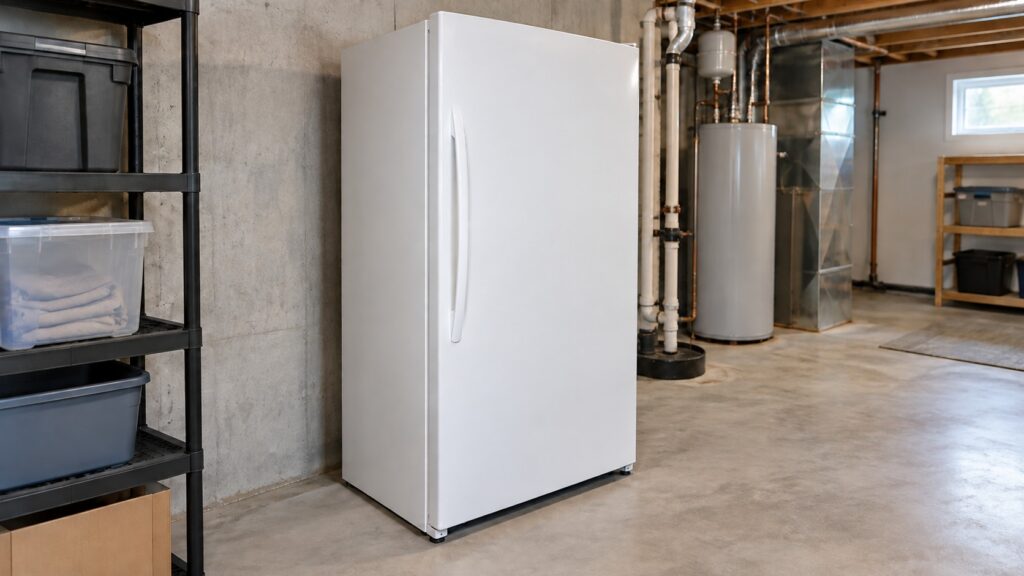
Damp matters as well. A basement or garage with high humidity encourages condensation on the cabinet and rust at the base over time. Good air movement around the unit helps more than anything else.
Power, and a rule that is not negotiable
A freezer wants its own grounded outlet on a circuit that is not shared with something heavy. Extension cords and power strips are not appropriate for a compressor load — the voltage drop makes starting harder and the connections heat under sustained current.
Think about what else is on the circuit, too. A freezer sharing a breaker with a workshop tool or a space heater will eventually trip while nobody is watching, and the first sign will be the smell. If the appliance is somewhere you do not visit daily, an inexpensive temperature alarm is worth more than any feature on the spec sheet.
Leveling and the door
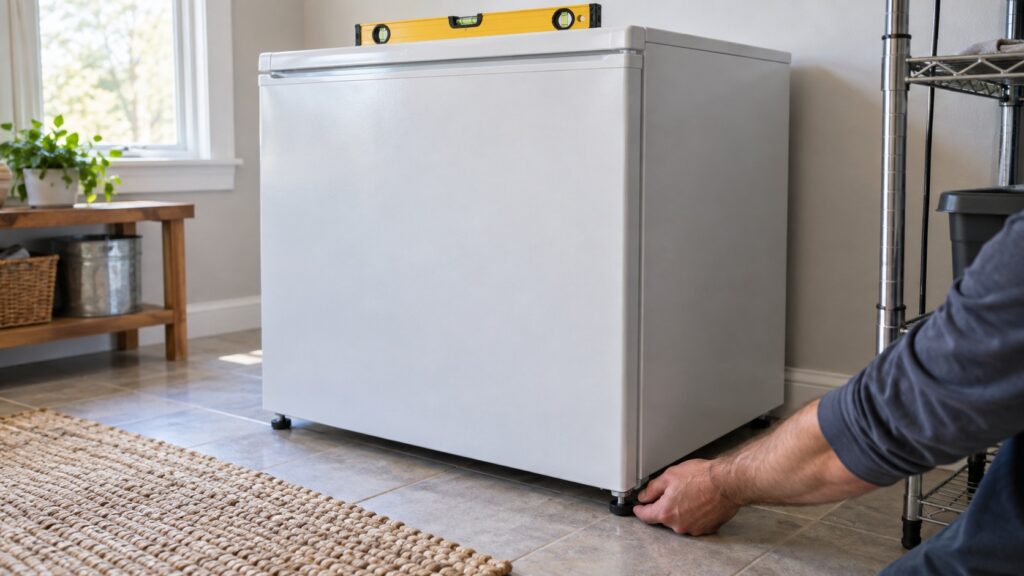
On an upright, set the front feet very slightly higher than the rear so the door falls closed rather than resting ajar. On a chest, level matters less for the lid but still matters for the drain plug to work when you defrost it.
Check the door seals all the way round with a banknote — closed on the note, it should grip everywhere. A new appliance that fails this test usually has a gasket distorted from packing, and leaving the door closed for a day often lets it recover its shape.
If you need the door to open the other way, most uprights allow reversal, and it is far easier on an empty machine before it is pushed into place. Our freezer maintenance guide covers the seal checks that belong on the yearly list.
Manual defrost or frost free, decided at installation
Which type you have changes what the installation has to allow for. A manual defrost freezer needs somewhere for meltwater to go once or twice a year — a drain plug at the base with room for a tray beneath it, or a position you can mop around without moving the appliance. Pushed tight into a corner, that annual job becomes far harder than it needs to be.
A frost-free model handles it internally, but it has a drain that carries the water to a pan near the compressor where it evaporates. That pan needs the airflow the clearance figures assume, and a unit crammed against a wall will eventually leave water on the floor instead.
Neither type is difficult to live with. Both are considerably easier if the installation leaves you access to the base of the appliance from the front.
First run and first load
- Run it empty until it reaches temperature — usually several hours, sometimes overnight on a large chest.
- Verify with a thermometer rather than trusting the dial, and place it between where packages will sit.
- Load gradually. Filling a freezer with room-temperature food all at once raises the cabinet temperature for hours.
- Leave airflow space on the first load; it settles once everything is frozen.
- Listen for the first day. A new appliance runs almost continuously at first, which is normal, then starts cycling.
When to call
Call when a new freezer will not reach temperature after a day, when it runs continuously beyond the first day or two, when frost builds unevenly from the start, or when the cabinet sweats on the outside in normal room conditions. Our not freezing guide and the frost buildup guide cover what is normal in each case.
We are an independent repair company and not a factory service arm. Pricing starts from a diagnostic visit and we confirm the estimate before any work begins. Kenmore freezer repair covers thermostats, seals, defrost and sealed systems, and you can schedule a visit online.