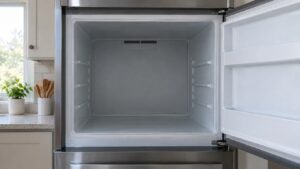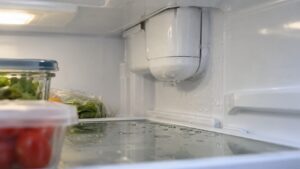
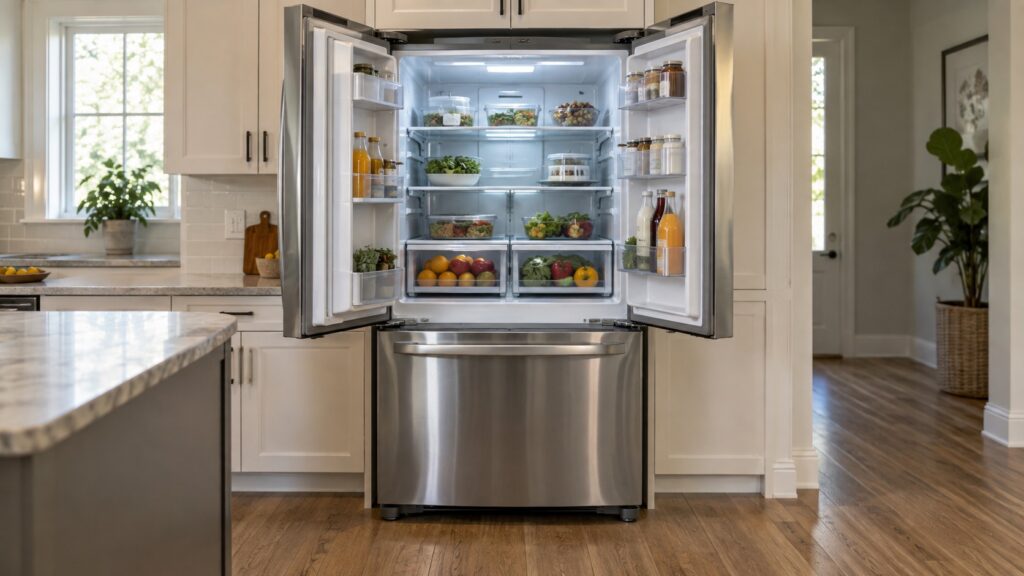
The 795-prefix Kenmore Elite refrigerators are built by LG, and they cover two different cabinet styles — bottom-freezer models and French-door models — that share a control platform but not always the same clearance and water-line details a delivery crew needs to get right. Getting a kenmore 795 refrigerator installation right the first time avoids the two complaints that generate the most callbacks on this platform: a refrigerator that will not build ice for the first day, and doors that do not close flush against the cabinets on either side.
How do you confirm you actually have a 795-series model?
Before ordering a water line kit or measuring a doorway, open the refrigerator door and read the model tag, usually along the inside wall near the top of the fresh-food compartment. A model number starting with 795 confirms the LG-built Kenmore Elite platform described here; other Kenmore refrigerator prefixes are built by different manufacturers and follow different installation specifics. Our Kenmore model number decoder covers how to read the full tag if the prefix alone leaves you unsure.
What clearance does a 795-series refrigerator need?
Because the 795 platform includes both bottom-freezer units with a single door and French-door units with two doors that swing independently, clearance planning differs slightly by style. A French-door model needs enough side clearance for each door to open past 90 degrees without striking an adjacent cabinet or wall, which is more generous than a single-door bottom-freezer needs on either side. Both styles need roughly an inch of clearance at the sides and back for the condenser to reject heat properly — pushing either style flush against a wall is the single most common cause of a unit that runs constantly without cooling any better for it.
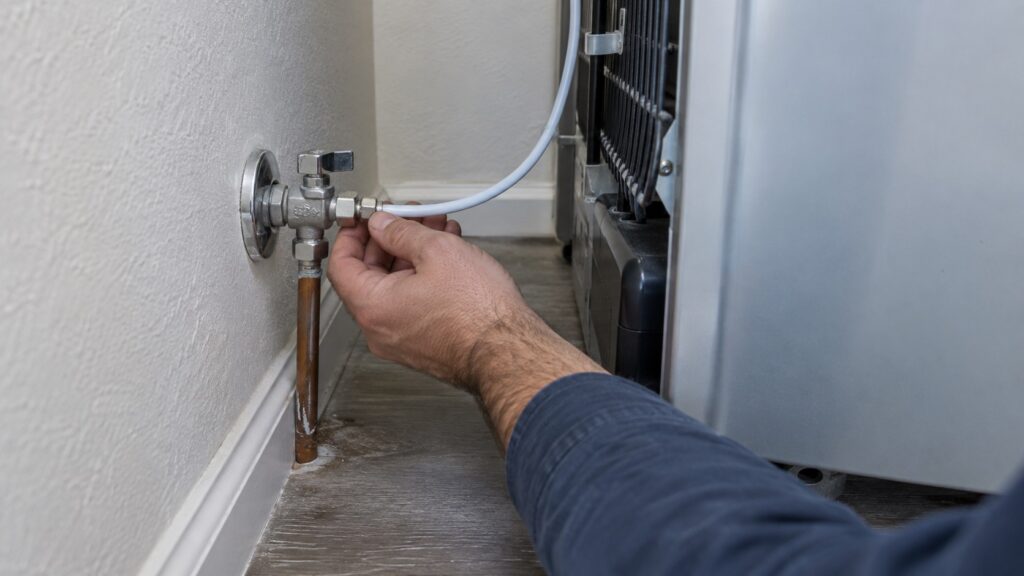
What does the water line installation involve?
Every 795-series refrigerator with an ice maker needs a dedicated 1/4-inch water line run from a nearby shutoff valve, and that valve needs to stay reachable rather than sealed behind the finished cabinetry — you will want access to it again the first time the ice maker needs service. Run the line without sharp kinks, since a kinked supply line restricts flow enough to produce slow ice production that looks like a component failure but is actually an installation issue. Once the line is connected and the shutoff opened, expect the first batch of ice to take up to 24 hours, and expect the first several batches to be discarded if the line was run with any residual debris in it.
What should you check before the delivery crew leaves?
- Confirm both doors close flush on a French-door model, without a visible gap on one side — an unlevel floor is the most common cause and is corrected with the front leveling legs, not by adjusting the doors.
- Run a level across the top of the cabinet side to side and front to back. An unlevel refrigerator seats its door gaskets unevenly and eventually leaks around one edge.
- Check the water line connection for a slow drip at the fitting before the crew leaves — a fitting that is only started, not seated, will not show a leak until the compressor has run for several hours and vibration works it loose.
- Note the breaker or outlet the refrigerator is plugged into, and confirm it is dedicated rather than shared with a high-draw appliance that could trip it.
What commonly goes wrong in the first week?
A refrigerator that seems to run constantly for the first day is usually still pulling down to temperature after transport and setup — that is normal and settles within 24 hours. A refrigerator that shows an error code shortly after installation is a different matter: Er FF points at an evaporator or freezer fan issue, and Er CO points at a lost communication link between the control board and the display, and either one appearing within days of delivery is worth reporting rather than waiting out, since it may reflect a connector jarred loose in transit rather than a component failure.
Does the delivery crew need to reverse or adjust the doors?
Some bottom-freezer 795-series models ship with a door that can be reversed to swing from the opposite side, which matters if the kitchen layout puts a wall or an island close to one side of the opening. French-door models do not have this option, since both doors are fixed to open outward from the center, which is exactly why the side-clearance math above matters more for that style than for a single-door unit. If a reversal is needed, it is far easier to handle before the refrigerator is pushed into its final position against cabinetry on both sides, since the hinge hardware needs access from angles that become difficult to reach once the unit is set in place.
It is also worth confirming the doorway and hallway leading to the kitchen were measured against the refrigerator’s full depth with its own door open partway, not just its closed-cabinet dimensions — a 795-series French-door unit is deeper than many older single-door refrigerators, and a delivery crew that has not measured this in advance can find themselves unable to get the unit around a tight turn without removing a door in the hallway rather than in the kitchen.
What ongoing care keeps a newly installed unit trouble-free?
Once the refrigerator has settled in and the ice maker is producing normally, the maintenance routine is the same as any Kenmore refrigerator — condenser coils kept clear of dust, the door gaskets checked for a firm seal, and the water filter changed on schedule — covered in full in our Kenmore refrigerator maintenance guide. None of that changes because the unit is LG-built rather than built by another manufacturer; the installation details above are what differ, not the upkeep that follows.
We are an independent repair company and not a factory service arm. Pricing starts from a diagnostic visit and we confirm the estimate before any work begins. Kenmore refrigerator repair covers fans, defrost, sensors, controls and sealed systems, and you can schedule a visit online.