Ordering the wrong part is the most expensive mistake in appliance repair, because it costs the part, the wait and usually a second wait. Understanding the kenmore range igniter parts and the burner components around them — what each one does, how it fails and how it is identified — turns a guess into a decision. This is the vocabulary, not a repair procedure.
Find the model number before anything else
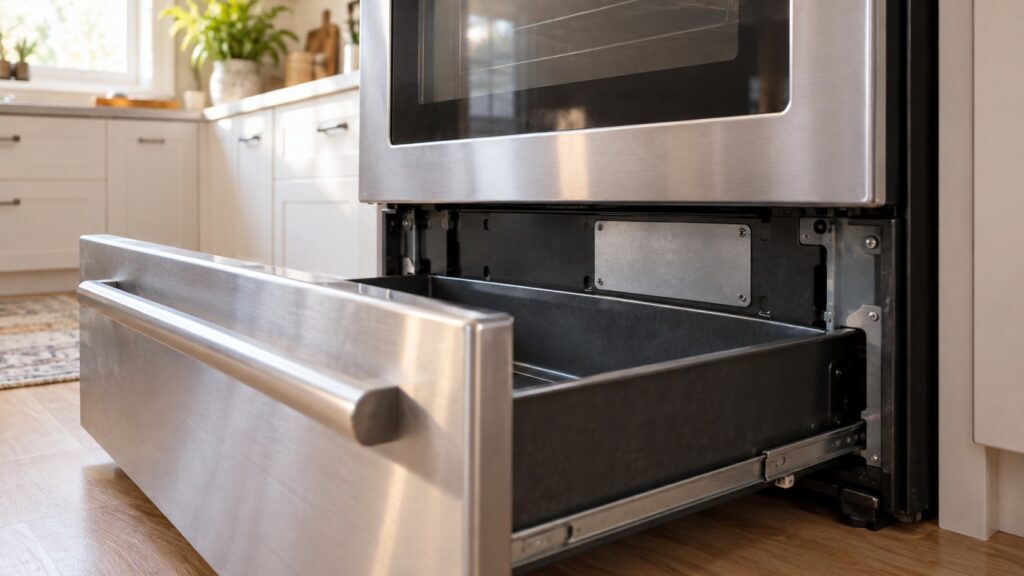
On a range, the plate is usually behind the storage drawer or the kick panel, on the frame behind the oven door, or along the edge of the door opening. It carries a full model number and a serial number, and both matter — parts sometimes change partway through a production run, and the serial number is what resolves that.
What is written on the front of the appliance is a marketing name, not a part-ordering identifier. Our model number decoder explains how the number is structured, and the parts lookup guide covers finding the right listing from it.
Gas surface burners: the parts and how they fail
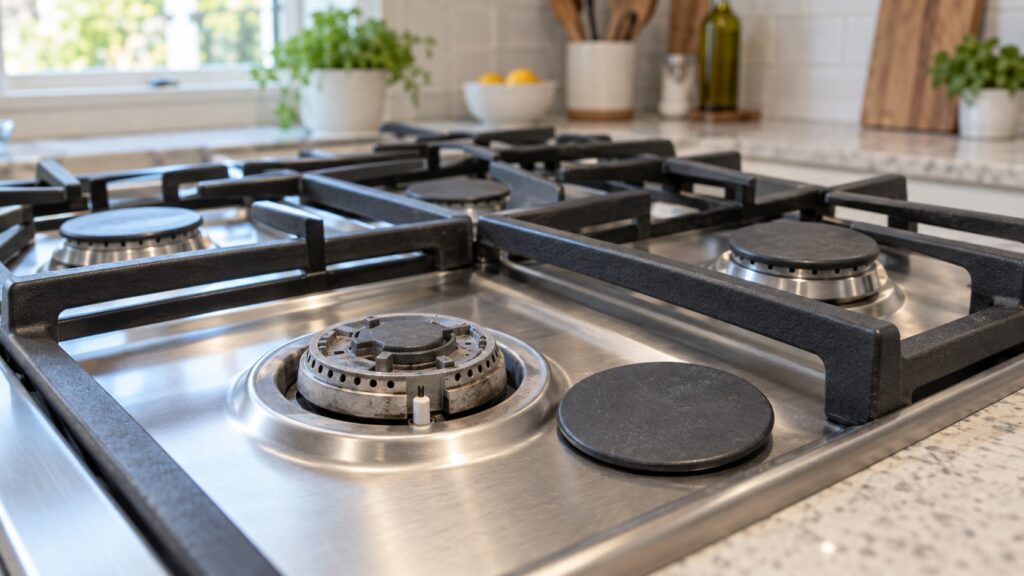
A sealed gas burner is a small stack of components. The burner base is fixed to the cooktop and carries the gas. The burner head sits on it with the ports — the small slots the flame emerges from. The burner cap covers the head and shapes the flame. And the electrode sits alongside, sparking to light the gas.
Most “burner will not light” faults are not parts at all. A cap sitting slightly off center, or a head that has not seated after cleaning, stops the burner lighting or gives an uneven flame. Ports blocked with spilled food do the same locally — one section of the ring lights and the rest does not.
The electrode itself fails in two ways: a cracked ceramic insulator, which lets the spark go to ground instead of across the gap, and food or moisture bridging the gap. Clean and dry it before replacing it. Our burner not igniting guide works through the order.
The spark module, and the clue that identifies it
All the electrodes on a gas cooktop are driven by one module. That gives a very distinctive symptom: when the module fails, every burner stops sparking at once, and when it partially fails, the clicking continues after a burner has lit — sometimes indefinitely.
Continuous clicking is worth knowing about because it is almost never the module first. Moisture around a switch or an electrode is the usual cause, and it clears once everything dries out. A module that has genuinely failed produces no spark anywhere, and that is a straightforward diagnosis.
The oven igniter on a gas range
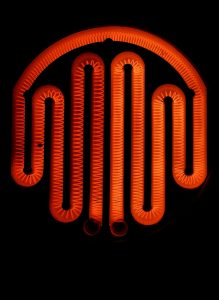
This is the part most often replaced on a gas range, and it is designed to wear. It is a glow bar that heats up and draws current; the gas safety valve opens only when the current through the igniter reaches a threshold. As the igniter ages it still glows, but it draws less current, and eventually it no longer opens the valve.
That produces the classic symptom: the igniter glows brightly for a long time and the burner never lights. People see it glowing and conclude it must be fine. It is not — a glowing igniter that does not light the oven is the definition of a worn igniter.
They come in two general styles, and the replacement has to match both the style and the mounting. This is a case where the model number is not optional.
Electric range surface parts
On a coil range, the parts are the element, the receptacle block it plugs into, and the infinite switch that controls power to it. Burnt receptacles are common and are a genuine safety item — a scorched, pitted block should be replaced along with the element rather than reused.
On a radiant or glass-top range, the element sits under the glass and the switch is replaced by a control that pulses power. An element that runs only at full power regardless of the setting is a switch or control fault rather than an element fault, and that distinction saves buying the wrong part.
Our oven parts guide covers the bake and broil side of the same appliance.
Knobs, valves and the parts behind the panel
Two more components account for a share of range calls. The gas valve behind each knob controls flow to that burner, and a valve that has gone stiff or will not hold a low flame is a valve rather than a burner problem. Regreasing is specialist work and replacement is usually the practical answer.
The knob itself is a part people forget can fail. A worn D-shaped socket lets the knob turn without turning the valve fully, which reads as a burner that will not go low or a control that no longer matches the markings. It is among the cheapest parts on the appliance and it is frequently the whole fault.
Buying sensibly
- Match the full model and serial, not the appliance width or a photograph.
- Check what the part supersedes. Manufacturers replace part numbers, and a listing that supersedes yours is usually the correct one.
- Beware very cheap igniters. A weak igniter that glows without opening the valve is a common complaint with poor aftermarket parts, and it wastes gas while it does it.
- Buy caps and heads as a set where they are sold that way, so the flame geometry is right.
- Keep the old part until the new one is fitted and working, so you can compare mountings and connectors side by side.
- Photograph the wiring before disconnecting anything, however obvious it looks at the time.
When to call
Call for any gas smell, for an oven igniter replacement if you are not comfortable working near the gas valve, for a spark module that gives no spark anywhere, for scorched wiring or a burnt receptacle, and for a range showing fault codes rather than a plain mechanical symptom — our F30 and F31 guide covers the sensor codes specifically.
We are an independent repair company and not a factory service arm. Pricing starts from a diagnostic visit and we confirm the estimate before any work begins. Kenmore range repair covers igniters, burners, switches and controls, and you can schedule a visit online.